 أجهزة استشعار درجة حرارة الألياف الضوئية INNO ,أنظمة مراقبة درجة الحرارة.
- مراقبة التفريغ الجزئي prevents insulation breakdown and catastrophic failures
- Core grounding current detection identifies multi-point grounding faults before damage occurs
- تحليل الغاز المذاب tracks oil degradation and internal fault development
- Moisture content measurement protects against insulation deterioration
- Winding temperature tracking using fluorescent fiber optics prevents thermal damage
- Bushing leakage current surveillance ensures reliable insulation performance
- تصميم وحدات allows flexible system configuration based on specific requirements
- Real-time alerts enable immediate response to developing issues
1. What Is Transformer Monitoring Equipment

معدات مراقبة المحولات consists of integrated online systems that continuously track the operational health and performance of power transformers. These systems employ multiple sensor technologies to measure critical parameters including electrical discharge activity, التغيرات في درجات الحرارة, تركيزات الغاز, and current flows. The equipment provides real-time data acquisition, يعالج, and analysis to detect abnormal conditions before they escalate into failures.
حديث أنظمة مراقبة حالة المحولات integrate six primary subsystems that work independently while sharing data through a centralized platform. Each subsystem targets specific failure mechanisms, creating comprehensive coverage of potential fault conditions. The equipment operates 24/7 without interrupting transformer service, collecting thousands of data points daily for trending analysis and predictive maintenance planning.
2. Why Transformers Require Continuous Monitoring Solutions
Power transformers represent critical assets in electrical infrastructure, often valued at millions of dollars with replacement lead times extending 12-18 شهور. Unplanned outages cause substantial economic losses through interrupted production, تكاليف الإصلاح في حالات الطوارئ, and potential safety incidents. مراقبة صحة المحولات addresses these risks by shifting maintenance from time-based schedules to condition-based interventions.
Traditional inspection methods rely on periodic offline testing during scheduled outages, creating blind spots between assessments where faults can develop undetected. Online transformer monitoring eliminates these gaps by providing continuous visibility into equipment condition. Studies show monitored transformers experience 60-70% fewer unexpected failures compared to units maintained through conventional approaches. The equipment pays for itself through extended asset life, reduced emergency repairs, and avoided outage costs.
3. Common Power Transformer Fault Types
3.1 Partial Discharge Failures
نشاط التفريغ الجزئي occurs when electrical stress exceeds local insulation strength, creating small arcs that progressively degrade insulation materials. This process accelerates over time, eventually leading to complete insulation breakdown and catastrophic failure. Partial discharge represents the leading cause of transformer failures in high-voltage applications.
3.2 Core Grounding Issues
Transformer cores must maintain single-point grounding to prevent circulating currents. Multi-point grounding faults create current loops that generate localized heating, gradually damaging core laminations and nearby insulation. These faults often remain undetected until significant damage occurs.
3.3 Oil Degradation Problems
Insulating oil deteriorates through oxidation, تلوث, والإجهاد الحراري. Degraded oil loses dielectric strength and cooling efficiency while generating combustible gases. تحليل الغاز المذاب tracks these changes by monitoring hydrogen, الميثان, الإيثان, الإيثيلين, الأسيتيلين, أول أكسيد الكربون, وتركيزات ثاني أكسيد الكربون.
3.4 Thermal Overload Conditions
Excessive winding temperatures result from overloading, فشل نظام التبريد, or internal faults. Temperatures above design limits accelerate insulation aging, with each 8°C increase halving insulation life expectancy. مراقبة النقاط الساخنة identifies developing thermal problems before permanent damage occurs.
3.5 Bushing Insulation Deterioration
Bushing failures account for 15-20% of transformer outages. Leakage current through bushing insulation increases as materials age or moisture ingress occurs, eventually leading to flashover events that can destroy the transformer.
4. Transformer Monitoring System Applications
مرافق توليد الطاقة employ monitoring equipment on generator step-up transformers where failures directly impact plant output capacity. These critical assets require maximum reliability to maintain generation schedules and avoid costly forced outages.
محطات النقل الفرعية utilize monitoring systems on high-voltage autotransformers and power transformers that form network backbone elements. Failures at these locations affect thousands of customers and create cascading impacts across the grid.
Industrial plants implement monitoring on facility transformers supporting continuous process operations where downtime generates substantial production losses. مرافق التصنيع, المصافي, and data centers particularly benefit from proactive fault detection.
منشآت الطاقة المتجددة including solar farms and wind power facilities depend on collector transformers that aggregate distributed generation. Monitoring ensures these assets achieve projected service lives in challenging environmental conditions.
5. Benefits of Online Transformer Monitoring Systems
التقييم المستمر للحالة provides operators with real-time visibility into equipment health, enabling informed decisions about loading, توقيت الصيانة, and operational strategies. This capability proves especially valuable during peak demand periods when utilities must balance system reliability against maximum asset utilization.
Early warning detection identifies developing faults weeks or months before failure, creating time windows for planned interventions during scheduled outages. This approach eliminates emergency repairs, reduces spare parts inventory requirements, and optimizes maintenance crew scheduling.
Reduced unplanned downtime translates directly to improved system reliability metrics and customer satisfaction. تقرير المرافق 40-60% reductions in forced outage rates for monitored transformer populations compared to unmonitored assets.
تمديد عمر المعدات results from operating within design parameters and addressing issues before they cause permanent damage. Monitored transformers typically achieve 35-40 year service lives versus 25-30 years for conventionally maintained units.
Historical data archives enable trending analysis that reveals gradual deterioration patterns and supports predictive modeling. This information guides strategic decisions about refurbishment timing, تخطيط الاستبدال, and fleet management priorities.
6. Transformer Monitoring System Architecture
6.1 Hardware Components
صفائف الاستشعار mount at strategic locations on the transformer to measure specific parameters. Ultrasonic transducers detect partial discharge acoustic emissions, current transformers monitor core grounding currents, fiber optic probes measure winding temperatures, and gas chromatography analyzers sample dissolved gases in oil.
وحدات الحصول على البيانات collect signals from sensors, perform analog-to-digital conversion, and execute preliminary processing. These ruggedized devices operate in harsh substation environments with extreme temperatures, التداخل الكهرومغناطيسي, and weather exposure.
وحدات الاتصالات transmit data to central monitoring platforms using fiber optics, cellular networks, or ethernet connections. Redundant communication paths ensure data availability even during network disruptions.
6.2 Software Platform
خوارزميات التحليل process incoming data streams, comparing measurements against baseline values and diagnostic thresholds. Machine learning techniques identify subtle pattern changes that indicate developing faults.
Alarm management systems generate notifications when parameters exceed acceptable limits, using severity levels to prioritize operator response. Multi-level alerts include visual displays, audible alarms, إشعارات البريد الإلكتروني, and SMS messages to on-call personnel.
7. How Transformer Monitoring Systems Work
Data collection cycles operate continuously, with sampling rates varying by parameter type. Temperature measurements update every few minutes, dissolved gas analysis runs hourly or daily, and partial discharge monitoring operates in real-time at millisecond intervals.
معالجة الإشارات filters raw sensor data to remove noise, compensate for environmental factors, and extract meaningful information. Advanced algorithms correlate data from multiple sensors to distinguish actual fault conditions from benign variations.
Diagnostic logic applies expert system rules developed from decades of transformer failure analysis. The system recognizes characteristic fault signatures such as specific gas ratios indicating thermal faults versus electrical discharge events.
Alert generation triggers when diagnostic criteria indicate abnormal conditions. The system categorizes alerts by severity, with informational notifications for minor deviations, warnings for conditions requiring investigation, and critical alarms for immediate threats demanding urgent response.
8. Transformer Monitoring Equipment Installation Process
8.1 التخطيط قبل التثبيت
Site survey activities document transformer specifications, مواقع التركيب المتاحة, power supply access, والبنية التحتية للاتصالات. Engineers identify optimal sensor positions based on transformer design and accessibility constraints.
Equipment selection matches monitoring system capabilities to transformer type, فئة الجهد, and criticality level. High-priority assets receive comprehensive monitoring while less critical units may employ reduced sensor sets.
Installation procedures define safety protocols, outage requirements, and coordination with operations personnel. Detailed work plans minimize transformer downtime and ensure proper commissioning.
8.2 خطوات التثبيت
تركيب المستشعر begins with partial discharge transducers attached to transformer tank walls, followed by current transformers on core grounding leads. Technicians install oil sampling ports for chromatography analyzers and insert fiber optic temperature probes through tank penetrations into winding areas.
Acquisition unit installation involves mounting weatherproof enclosures near the transformer, establishing power connections, and wiring sensors to input terminals. Proper grounding prevents electromagnetic interference from affecting measurements.
Network configuration connects acquisition units to the monitoring platform through available communication infrastructure. Technicians verify data transmission reliability and configure backup communication paths.
Software commissioning establishes baseline values, sets alarm thresholds, and validates system operation through functional testing. This phase includes training operations personnel on system features and response protocols.
8.3 Acceptance Testing
Functional verification confirms each sensor provides accurate measurements within specified tolerances. Technicians inject calibration signals and compare system readings against reference instruments.
Data validation examines information flow from sensors through the complete monitoring chain to the user interface, verifying data integrity and timestamp accuracy.
اختبار الإنذار simulates fault conditions to verify proper alert generation and notification delivery. This process validates that personnel receive timely warnings through all configured communication channels.
9. Detailed Subsystem Analysis
9.1 Partial Discharge Online Monitoring Subsystem
Ultrasonic detection technology captures acoustic emissions generated by partial discharge activity within transformer insulation. High-frequency transducers mounted on tank surfaces detect pressure waves propagating through oil from discharge sites. The system triangulates discharge locations using time-of-arrival differences at multiple sensors.
Key monitoring parameters include discharge magnitude measured in picocoulombs, معدل تكرار النبض, and phase correlation with power frequency voltage. Pattern recognition algorithms distinguish partial discharge from external noise sources like corona on nearby equipment.
| المعلمة | مواصفة |
|---|---|
| Detection Sensitivity | 5 pC minimum |
| نطاق التردد | 20-300 كيلو هرتز |
| Sensor Channels | 4-16 لكل محول |
| دقة الموقع | ±10 cm |
| معدل أخذ العينات | مستمر |
9.2 Core Grounding Current Monitoring Subsystem
Current measurement methodology employs precision current transformers on core ground connections to detect circulating currents indicating multi-point grounding faults. Normal single-point grounded cores show near-zero current flow, while multi-point faults generate measurable currents from induced voltages driving circulation through unintended ground paths.
Diagnostic capabilities track current magnitude trends over time, identifying gradual fault development from insulation breakdown between core laminations and tank structures. Sudden current increases indicate acute faults requiring immediate attention.
| المعلمة | مواصفة |
|---|---|
| نطاق القياس | 1 أماه – 10 أ |
| دقة | ±2% of reading |
| الفاصل الزمني لأخذ العينات | 1 دقيقة |
| عتبة الإنذار | شكلي 50-500 أماه |
| Temperature Compensation | تلقائي |
9.3 Dissolved Gas Analysis Monitoring Subsystem

Online gas chromatography continuously extracts oil samples from the transformer, separates dissolved gases, and quantifies individual gas concentrations. The system monitors seven key gases whose concentrations and ratios indicate specific fault types based on established diagnostic criteria.
Fault identification methods apply Duval Triangle, نسب روجرز, and IEC ratio methods to classify faults as thermal, electrical discharge, or cellulose decomposition. Trending analysis detects accelerating gas generation rates signaling active fault progression.
| المعلمة | مواصفة |
|---|---|
| Monitored Gases | ح₂, CH₄, C₂H₆, C₂H₄, C₂H₂, شركة, ثاني أكسيد الكربون |
| نطاق الكشف | 1-10,000 جزء في المليون |
| دقة | ±10% or 5 جزء في المليون |
| Analysis Cycle | 1-24 hours configurable |
| الفاصل الزمني للمعايرة | 6 شهور |
9.4 Photoacoustic Spectroscopy Monitoring Subsystem
Photoacoustic detection principles use modulated infrared laser light absorbed by target gas molecules, creating pressure fluctuations detected by sensitive microphones. This technique provides highly selective measurement of moisture content and specific gas species with minimal cross-sensitivity to other compounds.
Moisture monitoring advantages enable early detection of water ingress that degrades insulation performance. The system tracks moisture migration between oil and paper insulation, providing advance warning of conditions promoting accelerated aging.
| المعلمة | مواصفة |
|---|---|
| Moisture Range | 5-100 جزء في المليون في الزيت |
| حساسية | 0.5 جزء في المليون |
| وقت الاستجابة | <15 دقائق |
| درجة حرارة التشغيل | -40درجة مئوية إلى +70 درجة مئوية |
| صيانة | Annual filter replacement |
9.5 Fluorescent Fiber Optic Temperature Monitoring Subsystem
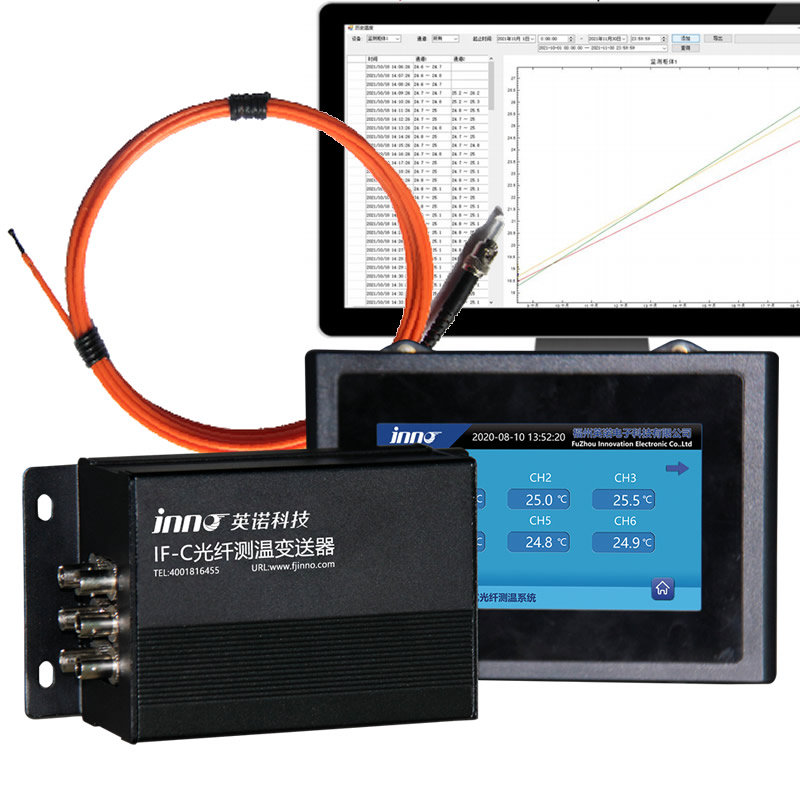
Fluorescent sensing technology exploits temperature-dependent fluorescence decay times in rare-earth-doped crystals at fiber optic probe tips. Unlike semiconductor-based sensors, fluorescent systems provide immunity to electromagnetic interference and function reliably in high-voltage environments without grounding issues.
Winding hot spot detection places fiber probes at critical locations including top oil, النفط السفلي, and multiple points within winding structures. The system identifies developing hot spots from blocked cooling ducts, shorted turns, or stray flux heating before insulation damage occurs.
| المعلمة | مواصفة |
|---|---|
| نطاق درجة الحرارة | -40درجة مئوية إلى +260 درجة مئوية |
| دقة | ±1 درجة مئوية |
| عدد النقاط | 8-32 لكل محول |
| وقت الاستجابة | <1 ثانية |
| قطر المسبار | 2.2 مم |
9.6 Bushing Leakage Current Monitoring Subsystem
Capacitive tap measurement monitors current flowing through bushing test taps, providing indication of insulation condition without requiring special sensors. Increasing leakage current reveals deteriorating insulation from aging, تلوث الرطوبة, or partial discharge activity within the bushing.
Preventive maintenance value allows scheduled bushing replacement during planned outages rather than catastrophic failures causing extended forced outages and potential transformer damage from explosive bushing failures.
| المعلمة | مواصفة |
|---|---|
| Current Range | 1 μA – 1 أ |
| Power Factor Measurement | 0.001 – 100% |
| Capacitance Measurement | 10 pF – 10 μF |
| معدل أخذ العينات | كل 15 دقائق |
| تصنيف الجهد | حتى 800 كيلو فولت |
10. Leading Transformer Monitoring Equipment Manufacturers
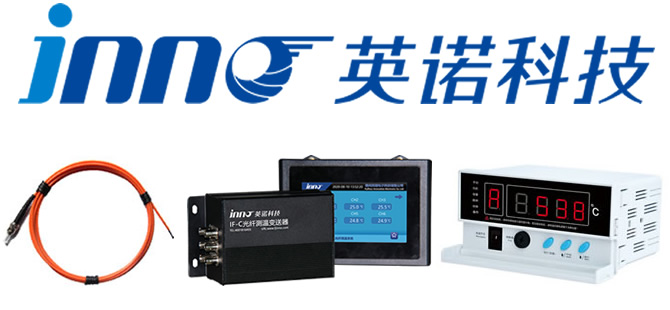
10.1 فوتشو الابتكار العلوم الإلكترونية&شركة التقنية, المحدودة. (الصين)
إنو specializes in comprehensive transformer monitoring solutions with particular expertise in fluorescent fiber optic temperature measurement systems. The company supplies integrated monitoring platforms combining all six subsystems with advanced diagnostic software developed specifically for Asian market conditions including high ambient temperatures and humid environments.
Their flagship product line features modular architecture allowing utilities to implement monitoring in phases based on budget constraints and asset criticality. INNO systems demonstrate exceptional reliability in challenging climates, with installations across Southeast Asia, الشرق الأوسط, and African regions showing 99.7% وقت التشغيل.
10.2 ايه بي بي (سويسرا)
ايه بي بي offers the TEC (Transformer Electronic Condition) monitoring system integrating dissolved gas analysis, كشف التفريغ الجزئي, and thermal monitoring. Their solutions emphasize integration with broader substation automation systems.
10.3 سيمنز للطاقة (ألمانيا)
سيمنز provides SITRAM monitoring equipment featuring advanced analytics and cloud connectivity for remote diagnostics. Their systems serve major European and North American utilities.
10.4 شنايدر إلكتريك (فرنسا)
شنايدر delivers EcoStruxure-based monitoring solutions with emphasis on cybersecurity and IoT integration for smart grid applications.
10.5 جنرال إلكتريك (الولايات المتحدة الأمريكية)
جنرال إلكتريك supplies Perception monitoring platforms with machine learning algorithms for predictive analytics and fleet-wide asset management capabilities.
10.6 ميتسوبيشي اليكتريك (اليابان)
Mitsubishi manufactures compact monitoring systems optimized for space-constrained installations with focus on reliability and minimal maintenance requirements.
10.7 توشيبا (اليابان)
توشيبا produces monitoring equipment emphasizing partial discharge detection accuracy and integration with their transformer product lines.
10.8 كواليترول (الولايات المتحدة الأمريكية)
كواليترول specializes in dissolved gas analysis systems and bushing monitoring with extensive installed base in power generation facilities.
10.9 إيتون (أيرلندا)
إيتون offers cost-effective monitoring solutions targeting distribution transformer applications and industrial facilities.
10.10 ويدمان (سويسرا)
ويدمان provides moisture monitoring systems and oil quality analysis equipment complementing transformer diagnostic services.
11. الأسئلة المتداولة
How often should monitoring system data be reviewed?
Critical alarms require immediate response within minutes of notification. Operators should review trending data weekly to identify gradual changes, while comprehensive analysis occurs monthly or quarterly depending on asset importance and operational history.
Do all transformers need monitoring equipment?
Monitoring proves most cost-effective on transformers rated 10 MVA and larger, units operating at high capacity factors, transformers serving critical loads, or equipment approaching end-of-life. Smaller distribution transformers typically rely on periodic testing rather than continuous monitoring.
What faults can monitoring detect?
Systems identify partial discharge activity, النقاط الساخنة المتعرجة, core grounding problems, insulating oil degradation, تلوث الرطوبة, bushing deterioration, اضغط على قضايا المغير, وفشل نظام التبريد. Detection occurs weeks to months before catastrophic failure in most cases.
Does installation interrupt transformer operation?
Most sensors install during scheduled maintenance outages lasting 8-24 hours depending on complexity. Once commissioned, monitoring operates continuously without affecting transformer performance or requiring additional outages.
How is monitoring data stored and analyzed?
Local servers or cloud platforms maintain data archives for 5-10 سنين. Analysis combines automated algorithms for alarm generation with periodic expert review of trending data. Machine learning techniques increasingly supplement rule-based diagnostics.
What is typical system reliability?
Quality monitoring equipment achieves 98-99% uptime with annual maintenance. Redundant sensors and communication paths ensure critical monitoring continues even during component failures.
ما هو العائد المتوقع على الاستثمار?
Monitoring systems typically achieve payback within 2-4 سنوات من خلال تجنب الفشل, تمديد عمر الأصول, and optimized maintenance. A single prevented catastrophic failure often exceeds total monitoring system cost.
Can systems provide remote access?
Modern platforms offer secure web-based interfaces accessible from any location. Mobile applications enable field personnel and management to view real-time conditions and historical data remotely.
12. Contact Us for Expert Monitoring Solutions
Our engineering team provides comprehensive support throughout the transformer monitoring system lifecycle, from initial consultation and system design through installation commissioning and ongoing technical assistance. We offer customized solutions matching your specific requirements, asset criticality levels, ومعلمات الميزانية.
Technical consultation services include site assessments, monitoring strategy development, equipment specification, and integration planning with existing SCADA systems. Our specialists bring decades of experience across diverse applications and challenging environments.
Request a detailed proposal outlining recommended monitoring approaches for your transformer fleet. Contact our experts today to discuss how advanced monitoring technology can enhance your asset reliability and operational efficiency.
13. Global Installation Case Studies
Saudi Arabia 380kV Substation Project
A major Saudi utility implemented comprehensive monitoring on twelve 380/132kV autotransformers across six substations. The project included all six monitoring subsystems with centralized data management. داخل 18 شهور, the system detected developing core grounding faults in two transformers and accelerating gas generation in one unit, enabling planned repairs that prevented three forced outages valued at $8 مليون.
UAE Solar Farm Collector Transformers
A 200MW solar installation in Abu Dhabi deployed monitoring equipment on sixteen 33kV collector transformers operating in extreme desert conditions with ambient temperatures exceeding 50°C. Fluorescent fiber optic temperature monitoring proved especially valuable for detecting cooling system degradation. The monitoring investment achieved payback within 30 months through extended transformer life and reduced maintenance costs.
Malaysia Power Generation Facility
A 1,200MW combined-cycle power plant in Johor equipped six generator step-up transformers with integrated monitoring systems. Online dissolved gas analysis identified developing winding insulation problems in one 400MVA unit, allowing controlled shutdown for repairs during a planned maintenance window. The avoided forced outage prevented approximately $12 million in lost generation revenue and emergency repair costs.
Nigeria Transmission Network Upgrade
The national transmission company installed monitoring systems on forty-eight 330/132kV transformers as part of network reliability improvement initiatives. Partial discharge monitoring identified insulation deterioration in bushings and internal structures, guiding strategic refurbishment investments. System-wide forced outage rates decreased by 47% during the first three years of operation.
Indonesia Industrial Complex
A petrochemical facility in Sumatra implemented monitoring on eight transformers serving critical process loads where downtime costs exceeded $500,000 كل ساعة. The modular system design allowed phased deployment matching budget availability while prioritizing most critical assets. Hot spot temperature monitoring prevented two potential winding failures during the first year of operation.
Kenya Geothermal Power Station
A 280MW geothermal facility deployed monitoring equipment on main transformers operating in corrosive volcanic environments. The systems track accelerated bushing degradation from sulfur compounds, enabling proactive replacement before failures occur. Monitoring data guides enhanced maintenance procedures specific to geothermal applications.
Qatar LNG Terminal
An LNG export terminal installed comprehensive monitoring on transformers supplying liquefaction compressor drives where reliability directly impacts production capacity. The integration with facility control systems provides operators real-time equipment status during critical loading operations. Predictive maintenance scheduling optimized around production cycles maximizes both equipment availability and facility throughput.

مستشعر درجة حرارة الألياف الضوئية, نظام مراقبة ذكي, الشركة المصنعة للألياف الضوئية الموزعة في الصين
 |
 |
 |