 أجهزة استشعار درجة حرارة الألياف الضوئية INNO ,أنظمة مراقبة درجة الحرارة.
- A transformer bushing is a critical insulating device that allows an energised, high-voltage conductor to pass safely through the grounded metal tank wall of a محول الطاقة, maintaining full electrical isolation while providing mechanical support and a gas/oil-tight seal.
- Bushings operate on the capacitance-graded condenser core مبدأ, where concentric layers of insulating material and conductive foils distribute the electric field evenly to prevent localised stress concentration and surface flashover.
- The most common bushing types in service today are Oil Impregnated Paper (مكتب بروتوكول الإنترنت) البطانات و Resin Impregnated Paper (قطع) البطانات, with RIP technology increasingly preferred for its fire resistance, lower maintenance, and superior moisture tolerance.
- Unlike a line post insulator أو station post insulator, a transformer bushing is a hollow, active electrical component مع موصل داخلي وطبقات عازلة هندسية - وليس مجرد دعم ميكانيكي.
- يعد فشل البطانة أحد الأسباب الرئيسية انفجارات المحولات والحرائق الكارثية, صنع مستمر مراقبة حالة البطانة - بما في ذلك اختبار السعة ومعامل الطاقة, كشف التفريغ الجزئي, و مراقبة درجة الحرارة - ضروري لأي برنامج مهم لإدارة أصول المحولات.
- أجهزة استشعار درجة حرارة الألياف الضوئية الفلورية توفير الطريقة الأكثر أمانًا والأكثر دقة لقياس درجات حرارة النقاط الساخنة مباشرة على وصلات موصل البطانة, رسم الخيوط, وواجهات البرج داخل بيئة المحولات المختومة, تقدم عزلًا متأصلًا للجهد العالي وتداخلًا كهرومغناطيسيًا كاملاً (إيمي) الحصانة.
جدول المحتويات
- ما هو جلبة المحولات?
- ماذا تفعل جلبة المحولات? - الوظيفة والدور
- كيف تعمل جلبة المحولات? - مبدأ العمل
- مزايا البطانات المحولات الحديثة
- Transformer Bushing vs Insulator — What Is the Difference?
- Types of Transformer Bushings
- Why Do Transformer Bushings Fail? — Failure Mechanisms
- Transformer Bushing Condition Monitoring — Methods and Technologies
- Temperature Monitoring for Transformer Bushings — Fibre Optic Solutions
- Power Transformer Winding Temperature Monitoring
- Transformer Oil Temperature Monitoring and Analysis
- Online Partial Discharge Monitoring for Transformers
- تحليل الغاز المذاب (دي جي ايه) and Transformer Health
- Transformer Tap Changer Monitoring and Diagnostics
- Integrated Transformer Condition Monitoring Systems
- Top Transformer Bushing and Monitoring Manufacturers
- خاتمة
- الأسئلة المتداولة (التعليمات)
1. ما هو جلبة المحولات?

أ جلبة المحولات is a hollow insulating structure that enables an electrical conductor to pass through the grounded, earthed metal tank wall — or turret cover — of a محول الطاقة while maintaining complete electrical isolation between the energised conductor and the grounded enclosure. Every power transformer, whether it is a 10 MVA distribution unit or a 1,500 MVA generator step-up transformer, requires bushings on both the high-voltage (الجهد العالي) والجهد المنخفض (LV) sides to bring electrical connections into and out of the sealed tank.
Physical Structure of a Transformer Bushing
A typical high-voltage transformer bushing consists of several key elements: a central conductor (solid rod or hollow tube) that carries the full load current; أ condenser core made of concentric layers of insulating material (oil-impregnated paper, resin-impregnated paper, or synthetic film) interleaved with conductive foil layers that grade the electric field; an external porcelain or composite polymer housing with weather sheds on the air side to provide creepage distance and protect the internal insulation from rain, تلوث, والتعرض للأشعة فوق البنفسجية; an oil-side portion that extends into the transformer tank and is immersed in transformer insulating oil; أ شفة التثبيت that bolts to the transformer turret and provides the gas/oil-tight seal; و أ top terminal for connection to the external overhead line, بسبار, or cable.
Voltage Ratings and Applications
Transformer bushings are manufactured for voltage ratings ranging from a few kilovolts in محولات التوزيع ما يصل الى 1,200 kV in ultra-high-voltage (الفائق) محولات الطاقة. Current ratings typically range from a few hundred amperes to 5,000 A or more for large generator transformers. Bushings are also used in مفاعلات التحويلة, محولات تحويل HVDC, furnace transformers, و wall bushings in switchgear buildings and GIS-to-transformer connections.
2. ماذا تفعل جلبة المحولات? - الوظيفة والدور

The transformer bushing performs three simultaneous and equally critical functions within the transformer system.
العزل الكهربائي
The primary function of the bushing is to electrically insulate the high-voltage conductor from the grounded transformer tank. Without this insulation, the full system voltage would flash over to earth at the tank wall penetration point, causing an immediate short circuit and catastrophic failure. The insulation must withstand not only the normal operating voltage but also transient overvoltages caused by lightning strikes, التحول المفاجئ, and system fault events, as defined by standards such as اللجنة الانتخابية المستقلة 60137 و IEEE C57.19.00.
Current Conduction
The bushing must carry the full rated load current — and short-time overcurrents during fault conditions — without excessive temperature rise. The conductor and its internal connections to the transformer winding lead (draw lead) must maintain low electrical resistance to minimise I²R losses and prevent hotspot formation.
Mechanical Support and Sealing
The bushing provides the mechanical structure that supports the external line connection and withstands wind loads, ice loads, seismic forces, and the static weight of connected conductors. معًا, the flange assembly must maintain a reliable oil-tight and gas-tight seal between the internal transformer tank environment and the external atmosphere over a service life of 30–40 years.
3. كيف تعمل جلبة المحولات? - مبدأ العمل
The Condenser Grading Principle
High-voltage transformer bushings — typically rated 72 kV and above — operate on the condenser (capacitance) grading principle. The condenser core consists of multiple concentric cylindrical layers of insulating material (paper, resin-paper, or film), each separated by a thin conductive foil layer. These foil layers are arranged so that each successive layer is at a progressively lower voltage potential from the central conductor to the outermost grounded foil connected to the mounting flange.
This arrangement distributes the total applied voltage across multiple small, uniform voltage steps rather than allowing the entire voltage to stress a single insulation layer at the conductor surface. The result is a uniform radial electric field و أ controlled axial voltage distribution along the length of the bushing, both of which are essential to preventing localised insulation breakdown. The outermost foil layer — known as the capacitance tap (C2 or power factor tap) — is typically brought out to an external test terminal, enabling field measurement of the bushing’s capacitance and dielectric dissipation factor (تان δ / عامل الطاقة) as a diagnostic indicator of insulation health.
Oil-Side and Air-Side Insulation
The portion of the bushing that protrudes above the transformer turret into the open air (ال air-side) is protected by the porcelain or composite housing and its rain sheds. The portion immersed in the transformer tank (ال oil-side) is insulated by the transformer oil and by the lower section of the condenser core. The design must account for the different dielectric properties of air and oil, and the interface at the mounting flange — where the bushing transitions between the two media — is one of the most electrically and thermally stressed regions of the entire assembly.
4. مزايا البطانات المحولات الحديثة
Reliable Electric Field Control
توفر تقنية تصنيف المكثف المستخدمة في البطانات الحديثة الدقة, التحكم المتوقع في توزيع المجال الكهربائي, ضمان التشغيل الآمن في ظل جميع ظروف الجهد المحددة بما في ذلك اختبارات نبضات البرق وتبديل النبضات. لا يمكن تحقيق هذا التحكم الميداني بالبساطة, تصميمات العزل السائبة غير المتدرجة.
تصميم مدمج
تعد البطانات المتدرجة المكثفة أقصر بكثير وأكثر إحكاما من التصميمات غير المتدرجة التي تحتاج إلى نفس تصنيف الجهد الكهربي. وهذا يقلل من الارتفاع الكلي للمحول, يبسط لوجستيات النقل, ويخفض الأحمال الميكانيكية على هيكل برج المحولات.
المدمج في القدرة التشخيصية
يوفر صنبور السعة الموجود على البطانات المكثفة نقطة وصول تشخيصية لا تقدر بثمن. عن طريق قياس دوري أو مستمر bushing capacitance (ج1) و عامل الطاقة (تان δ) عبر هذه الصنبور, يمكن للمشغلين اكتشاف تدهور العزل في مرحلة مبكرة - غالبًا قبل سنوات من حدوث الفشل. تعد قدرة المراقبة المضمنة هذه فريدة من نوعها بالنسبة للبطانات من النوع المكثف وهي إحدى أهم مزاياها.
عمر خدمة طويل
تصنيعها بشكل جيد وصيانتها بشكل صحيح البطانات OIP و البطانات RIP تحقيق عمر الخدمة بشكل روتيني من 30 إلى 40 سنة. تصاميم ريب, بخاصة, توفر عمرًا ممتدًا بسبب مقاومتها لامتصاص الرطوبة والشيخوخة الحرارية.
5. Transformer Bushing vs Insulator — What Is the Difference?
البطانات المحولات و العوازل الكهربائية (مثل عوازل خط آخر, عوازل محطة آخر, عوازل التعليق, و عوازل دبوس) كلاهما من الأجهزة العازلة المستخدمة في أنظمة الطاقة ذات الجهد العالي, لكنها تختلف بشكل أساسي في الوظيفة, بناء, والتطبيق.
الفرق الوظيفي
ان عازل is a passive mechanical support that holds an energised conductor in position while isolating it from the grounded support structure (pole, tower, or frame). It does not contain an internal conductor — the line conductor is attached externally to the insulator’s hardware. أ جلبة المحولات, على النقيض من ذلك, is an active electrical feedthrough device with an internal conductor, a condenser core, and a sealed interface to the transformer tank. It carries the full load current through the grounded barrier, not simply supports an external conductor.
Construction Difference
A typical porcelain or glass disc insulator is a solid or hollow body of insulating material with no internal active electrical grading. أ condenser bushing is a precision-engineered multi-layer component with conductive foil grading layers, a central conductor, an oil or gas filling, and a capacitance tap — far more complex than any conventional insulator.
جدول المقارنة
| ميزة | جلبة المحولات | Insulator |
|---|---|---|
| Primary function | Conduct current through a grounded barrier with insulation | Mechanically support a conductor and insulate from ground |
| Internal conductor | نعم | لا |
| Condenser grading | نعم (HV types) | لا |
| Sealed to tank / الضميمة | نعم (oil/gas-tight flange) | لا |
| Current-carrying capability | Yes — rated current up to 5,000 A+ | لا (conductor is external) |
| السعة / tan δ tap | نعم | لا |
| Typical location | Transformer turrets, reactor tanks, wall penetrations | Overhead lines, أشرطة التوصيل, station structures |
| Failure consequence | Potential transformer explosion and fire | Line drop or flashover to ground |
في ملخص, while both devices provide electrical insulation, a transformer bushing is a far more complex, multi-function component whose failure carries significantly higher consequences than the failure of a line or station insulator.
6. Types of Transformer Bushings
Oil Impregnated Paper (مكتب بروتوكول الإنترنت) البطانات
البطانات OIP are the traditional and most widely installed bushing type worldwide. The condenser core is constructed from layers of kraft paper wound onto the central conductor and impregnated with mineral insulating oil. The oil fills the interstices of the paper and also fills the interior of the porcelain housing, serving as both insulation and a heat transfer medium. OIP bushings are well-proven, فعالة من حيث التكلفة, and available across all voltage ratings. لكن, they contain a significant volume of flammable mineral oil, which poses a fire risk in the event of a housing fracture, and they are sensitive to moisture ingress through aged or damaged seals.
Resin Impregnated Paper (قطع) البطانات
البطانات RIP use a condenser core made of crepe paper impregnated and bonded with epoxy or polyester resin under vacuum and pressure. The cured core is a solid, self-supporting structure that does not require oil filling inside the bushing housing. RIP bushings offer superior fire safety (no free oil inside the housing), higher mechanical strength, better resistance to moisture ingress, and reduced maintenance compared with OIP. They have become the preferred choice for new transformer installations in many markets, particularly in indoor substations, urban environments, and applications where fire risk must be minimised.
Resin Impregnated Synthetics (ريس) البطانات
RIS bushings replace the traditional kraft paper with synthetic film insulation (such as polypropylene or polyester film) impregnated with resin. This further improves the dielectric performance, reduces partial discharge susceptibility, and can enable a more compact design for a given voltage rating.
Other Bushing Types
Additional bushing types include SF6 gas-filled bushings (used in GIS-to-transformer connections), dry-type bushings (for medium-voltage and dry-type transformers), capacitance-graded epoxy bushings, و oil-to-SF6 bushings that serve as the interface between an oil-filled transformer and a gas insulated switchgear bay.
7. Why Do Transformer Bushings Fail? — Failure Mechanisms
Bushing failure is one of the most dangerous events that can occur on a power transformer. Industry statistics consistently identify bushing failures as a leading cause of transformer fires and explosions, accounting for an estimated 10–25 % of all major transformer failures depending on the study and fleet age. Understanding the failure mechanisms is essential for effective monitoring and prevention.
Moisture Contamination
Moisture is the primary enemy of البطانات OIP. Water ingress through degraded gaskets, cracked porcelain, or failed oil seals progressively saturates the paper insulation, reducing its dielectric strength and accelerating thermal ageing. Elevated moisture levels lower the partial discharge inception voltage and increase the dielectric loss (تان δ), creating a self-reinforcing degradation cycle that can ultimately lead to insulation breakdown.
Thermal Degradation and Overheating
مُبَالَغ فيه conductor temperature — caused by overloading, poor contact resistance at the draw-lead connection, or inadequate oil circulation — accelerates the thermal decomposition of the paper insulation and oil within the bushing. The decomposition products (including water, شركة, ثاني أكسيد الكربون, and combustible gases) further degrade the insulation, تقليل قوة عازلة, and increase the risk of internal arcing. Hotspots at the bottom connection (draw lead) are particularly dangerous because they are submerged in transformer oil and are invisible to external inspection.
التفريغ الجزئي
التفريغ الجزئي (بي دي) within the condenser core — caused by voids, delaminations, تلوث, or excessive electric field stress — erodes the paper insulation progressively. متأخر , بعد فوات الوقت, PD channels can grow and bridge insulation layers, eventually leading to a flashover between foil layers or from the conductor to the grounded flange.
External Pollution and Tracking
On the air side, accumulation of pollution, salt deposits, or industrial contaminants on the porcelain or composite housing surface reduces the effective creepage distance and can lead to تتبع السطح, dry-band arcing, and eventually external flashover — particularly under wet or humid conditions.
Mechanical Damage
Seismic events, transportation damage, improper handling during installation, and thermal cycling can crack the porcelain housing, damage the condenser core, or compromise the flange seal. Cracked porcelain allows moisture to enter and insulating oil to leak out, rapidly accelerating insulation deterioration.
Ageing and End-of-Life Degradation
Even under normal operating conditions, the organic insulation materials (paper and oil) within bushings undergo gradual thermal and oxidative ageing. After 25–35 years of service, many OIP bushings approach or exceed the point where their insulation integrity can no longer be relied upon, and proactive replacement becomes necessary — ideally guided by monitoring and diagnostic data.
8. Transformer Bushing Condition Monitoring — Methods and Technologies

Given the catastrophic consequences of bushing failure, a range of monitoring and diagnostic techniques have been developed to detect insulation degradation and other fault precursors at the earliest possible stage.
Capacitance and Power Factor (تان δ) يراقب
The most widely established bushing diagnostic method involves measuring the capacitance (ج1) و dielectric dissipation factor (تان δ) of the condenser core via the built-in capacitance tap. Changes in C1 indicate physical changes within the condenser core (such as short-circuited foil layers or moisture absorption), while increases in tan δ indicate dielectric losses caused by moisture, ageing, أو التلوث. Both offline periodic testing and online continuous monitoring systems are available. Online systems measure these parameters continuously under service voltage, providing real-time trend data and early-warning alarms.
التفريغ الجزئي (بي دي) يراقب
كشف التفريغ الجزئي — using UHF sensors, أجهزة الاستشعار الصوتية, or electrical coupling via the bushing tap — can identify active PD sources within the condenser core or at the bushing-to-oil interface. PD monitoring is often integrated into the same online platform that monitors capacitance and tan δ.
تحليل الغاز المذاب (دي جي ايه)
ل البطانات OIP equipped with an oil sampling valve, periodic or online تحليل الغاز المذاب of the bushing oil provides a powerful diagnostic tool. Elevated levels of hydrogen (ح₂), الأسيتيلين (C₂H₂), and other fault gases indicate internal arcing, ارتفاع درجة الحرارة, or partial discharge activity within the bushing.
مراقبة درجة الحرارة
مراقبة درجة الحرارة of the bushing conductor, the draw-lead connection, and the flange interface is an increasingly recognised component of a comprehensive bushing health programme. Abnormal temperature rise at the bottom connection or along the conductor can indicate increased contact resistance, degraded connections, or overloading — all of which are precursors to thermal runaway and insulation failure. The most effective technology for this application is fluorescent fibre optic temperature sensing, which is described in detail in the following section.
التصوير الحراري بالأشعة تحت الحمراء (خارجي)
دورية الأشعة تحت الحمراء (و) scanning of the external bushing surface can detect abnormal heating patterns on the air-side porcelain or top terminal. لكن, IR thermography cannot see inside the porcelain housing or below the oil level, limiting its effectiveness for detecting internal faults, particularly at the critical bottom connection.
9. Temperature Monitoring for Transformer Bushings — Fibre Optic Solutions
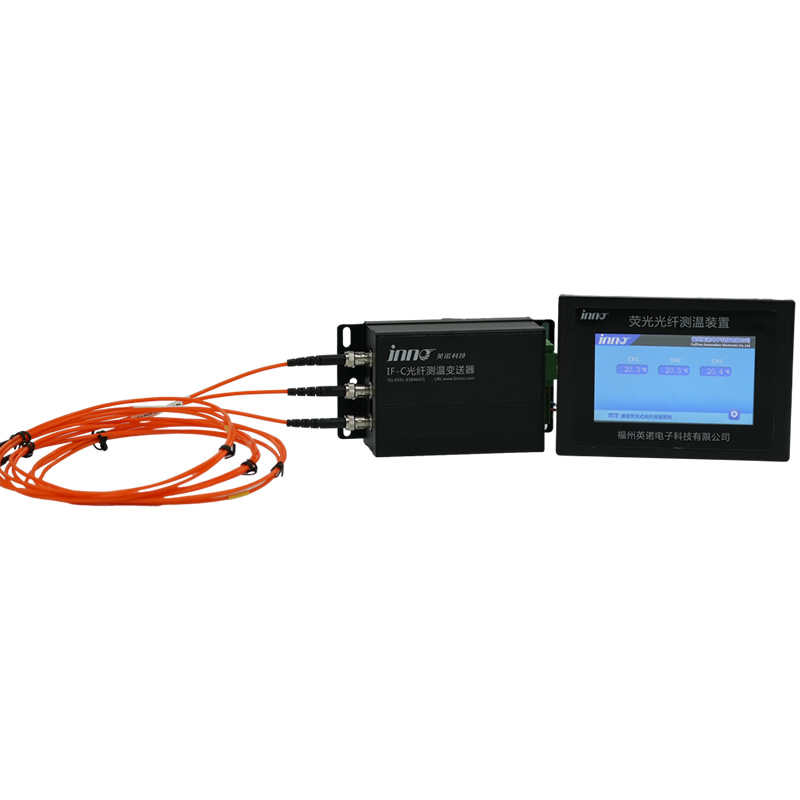
Among all bushing monitoring technologies, مراقبة درجة الحرارة provides uniquely direct information about the thermal condition of the current-carrying conductor and its connections. إن موصل البطانة الذي يعمل عند درجة حرارة مرتفعة بسبب انخفاض مقاومة التلامس أو التيار الزائد سوف يخضع لشيخوخة العزل المتسارعة, إنتاج غازات التحلل, و- إذا كان الخطأ شديدًا بدرجة كافية - يتطور إلى الانفلات الحراري والفشل الكارثي.
لماذا تعتبر أجهزة استشعار الألياف الضوئية مثالية لمراقبة درجة حرارة البطانة
يمثل الجزء الداخلي من جلبة المحول بيئة قياس صعبة للغاية: يعمل الموصل على الجهد العالي (عشرات إلى مئات كيلو فولت), إنه محاط بالزيت العازل والغاز المضغوط, ويكون التجميع بأكمله محاطًا بطبقة من البورسلين أو الغلاف المركب. أجهزة استشعار درجة الحرارة الكهربائية التقليدية – المزدوجات الحرارية, أهداف التنمية المستدامة, and electronic wireless devices — either cannot achieve the required high-voltage isolation, are susceptible to electromagnetic interference, or cannot be safely installed on or near the energised conductor without compromising the insulation system.
أجهزة استشعار درجة حرارة الألياف الضوئية الفلورية solve these problems entirely. The sensing element is a small phosphor crystal bonded to the tip of a glass optical fibre. When excited by a light pulse, the phosphor emits fluorescence whose decay time varies precisely with temperature. The optical fibre is entirely non-metallic and non-conductive, providing inherent galvanic isolation في أي مستوى الجهد. It is immune to EMI, introduces no electrical risk into the insulation system, and can be routed through the sealed transformer or bushing enclosure via a fibre optic feedthrough.
مقارنة: Fibre Optic vs Other Temperature Methods for Bushing Monitoring
| ميزة | Fluorescent Fibre Optic | الحرارية | الحق في التنمية (PT100) | الأشعة تحت الحمراء (خارجي) | Wireless SAW Sensor |
|---|---|---|---|---|---|
| HV isolation | Inherent — fully dielectric | يتطلب حاجز العزل | يتطلب حاجز العزل | عدم الاتصال, خارجي فقط | لاسلكي, antenna on HV |
| مناعة EMI | مكتمل | مُعَرَّض ل | مُعَرَّض ل | منيع | معتدل |
| Direct conductor measurement | نعم | لا (مخاطر السلامة) | لا (مخاطر السلامة) | لا (surface/external only) | نعم (limited) |
| دقة | ±1 درجة مئوية | ±1.5–2.5 °C | ±0.3–0.5 °C | ±2-5 درجة مئوية | ±1-2 درجة مئوية |
| Measures internal hotspot | نعم | لا | لا | لا | محدود |
| المراقبة المستمرة عبر الإنترنت | نعم | نعم (if isolated) | نعم (if isolated) | لا (periodic manual) | نعم |
| Suitability for sealed bushing/transformer | ممتاز | فقير | فقير | محدود (خارجي فقط) | معتدل |
| الاستقرار على المدى الطويل | ممتاز (لا الانجراف) | معتدل (الانجراف) | جيد | لا يوجد | جيد |
| Maintenance requirement | منخفض جدًا | المعايرة الدورية | المعايرة الدورية | Lens/window cleaning | استبدال البطارية |
As demonstrated in the comparison, fluorescent fibre optic temperature sensing delivers the best combination of safety, دقة, مناعة EMI, and suitability for the sealed, high-voltage environment inside transformer bushings and transformer tanks. This technology is now widely specified by utilities and OEMs for new-build محولات الطاقة and as a retrofit monitoring upgrade on critical in-service units.
10. Power Transformer Winding Temperature Monitoring
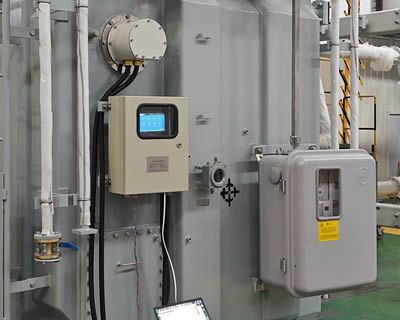
Beyond bushing monitoring, درجة حرارة اللف is the single most important parameter for transformer thermal management and life assessment. ال hottest spot temperature within the transformer winding directly determines the rate of insulation ageing according to well-established thermal ageing models (اللجنة الانتخابية المستقلة 60076-7, إيي سي57.91). تقليدي مؤشرات درجة حرارة اللف (خام غرب تكساس الوسيط) use a thermal image method that estimates the hotspot from the top-oil temperature plus a current-dependent thermal correction. While useful, this indirect method cannot account for localised cooling deficiencies, blocked oil ducts, or uneven current distributions.
Fibre optic temperature sensors installed directly on the transformer winding — at the predicted hotspot locations identified by the transformer manufacturer’s thermal design — provide true, مباشر winding hotspot temperature measurement. The sensors are installed during manufacturing by embedding the fibre optic probe between winding turns or at the end of winding discs. Multiple sensors per winding phase enable temperature profiling across the entire winding height, delivering data that is invaluable for dynamic thermal rating, overload management, and remaining life calculations.
11. Transformer Oil Temperature Monitoring and Analysis

Top-oil temperature و bottom-oil temperature are fundamental measurements for transformer cooling system management and thermal performance assessment. These temperatures are typically measured using PT100 آر تي دي installed in thermowells on the transformer tank. لكن, for oil temperature measurement at critical internal locations — such as the oil channel near the winding hotspot, the oil inlet to the bushing pocket, or the oil flow in the ONAN/ONAF cooling circuit — fibre optic temperature probes again offer the advantage of being embeddable directly inside the oil-filled tank without any electrical insulation concerns.
Oil temperature data is used in conjunction with تحليل الغاز المذاب (دي جي ايه) results to assess whether abnormal gas generation is linked to localised overheating. A rising oil temperature trend — particularly if it diverges from the expected load-dependent profile — is a strong indicator of an internal fault developing within the transformer, such as a circulating current in the core, أ shorted winding turn, or a degraded bushing connection.
12. Online Partial Discharge Monitoring for Transformers
التفريغ الجزئي (بي دي) يراقب is a critical complement to temperature monitoring for comprehensive transformer condition assessment. PD activity within the transformer — whether in the winding insulation, ال bushing condenser core, the lead support structures, or the insulating barriers — indicates developing insulation defects that may progress to catastrophic failure. Online PD monitoring systems use ultra-high-frequency (التردد فوق العالي) أجهزة الاستشعار, acoustic emission sensors, أو المحولات الحالية عالية التردد (مركبات الكربون الهيدروفلورية) installed on the bushing capacitance tap connection to continuously detect and locate PD sources without taking the transformer out of service.
Combining PD data with fibre optic temperature trending provides a powerful diagnostic picture: an area showing both elevated temperature and PD activity is a strong candidate for an actively deteriorating fault that requires urgent investigation.
13. تحليل الغاز المذاب (دي جي ايه) and Transformer Health

تحليل الغاز المذاب is widely regarded as the single most informative diagnostic technique for oil-filled transformers, including the assessment of صحة البطانة. Internal faults — including arcing, hotspot overheating, and partial discharge — decompose the insulating oil and paper, producing characteristic gases (هيدروجين, الميثان, الإيثان, الإيثيلين, الأسيتيلين, أول أكسيد الكربون, وثاني أكسيد الكربون) التي تذوب في الزيت. متصل شاشات DGA sample the transformer oil continuously and measure key gas concentrations in real time, providing early warning of incipient faults. عندما يقترن مع مراقبة درجة الحرارة و bushing capacitance/tan δ monitoring, DGA data enables precise fault type identification and location, supporting informed maintenance decision-making.
14. Transformer Tap Changer Monitoring and Diagnostics
ال مغير الصنبور عند التحميل (OLTC) is the most mechanically active component of a power transformer and is responsible for a significant proportion of transformer maintenance needs and failures. OLTC condition monitoring typically includes تحليل التوقيع الحالي للمحرك, contact wear monitoring, drive mechanism timing, oil quality monitoring in the OLTC compartment, and — increasingly — fibre optic temperature monitoring of the selector and diverter switch contacts. Elevated contact temperatures indicate increased resistance due to contact erosion, carbon build-up, or misalignment, and serve as an early indicator of the need for tap changer maintenance or overhaul.
15. Integrated Transformer Condition Monitoring Systems
Modern best practice in transformer asset management brings together data from multiple monitoring technologies into a single integrated platform. شامل نظام مراقبة حالة المحولات typically integrates fibre optic winding and bushing temperature monitoring, DGA على الانترنت, bushing capacitance and power factor monitoring, مراقبة التفريغ الجزئي, تشخيص OLTC, cooling system performance monitoring (pump and fan status, تدفق النفط, درجة الحرارة المحيطة), و load and voltage measurements from the transformer’s current and voltage transformers.
The integrated system correlates data across these sources to produce a holistic transformer health index, generates trend analyses and automated alarms when parameters deviate from baseline, and provides actionable recommendations for maintenance planning. Communication to the utility’s سكادا, DCS, أو إدارة أصول المؤسسة (EAM) system is typically via اللجنة الانتخابية المستقلة 61850, DNP3, مودبوس تكب, أو إم كيو تي تي البروتوكولات. The result is a shift from reactive or time-based maintenance to a truly الصيانة على أساس الحالة (تدابير بناء الثقة) strategy that maximises asset life, minimises unplanned outages, and optimises maintenance expenditure.
16. Top Transformer Bushing and Monitoring Manufacturers

| رتبة | شركة | المقر الرئيسي | المنتجات الرئيسية / خدمات |
|---|---|---|---|
| 1 | فوتشو الابتكار العلوم الإلكترونية&شركة التقنية, المحدودة. | فوتشو, الصين | Fluorescent fibre optic temperature monitoring systems for transformer bushings, اللفات, مغير الصنبور, وصلات الكابلات, والمفاتيح الكهربائية; multi-channel signal demodulators; fibre optic probes and feedthroughs; integrated online monitoring platforms |
| 2 | ايه بي بي (شركة هيتاشي للطاقة) — Bushing Division | سويسرا | مكتب بروتوكول الإنترنت, قطع, and RIS transformer bushings (ما يصل الى 1,200 كيلو فولت); أنظمة مراقبة البطانة |
| 3 | Siemens Energy — Trench Group | ألمانيا / كندا | Condenser bushings (مكتب بروتوكول الإنترنت, قطع), محولات الصك |
| 4 | مصنع الآلات رينهاوزن (السيد) | ألمانيا | OLTC monitoring (MSENSE, ETOS), مراقبة البطانة (BOMO) |
| 5 | HSP Hochspannungsgeräte | ألمانيا | High-voltage OIP and RIP bushings, wall bushings |
| 6 | كواليترول (سيرفيرون) | الولايات المتحدة الأمريكية | شاشات DGA على الانترنت, شاشات جلبة, منصات مراقبة المحولات |
| 7 | التقييمات الديناميكية | الولايات المتحدة الأمريكية / أستراليا | Bushing monitor (Intellix BM), capacitance and tan δ online monitoring |
| 8 | جي فيرنوفا (Grid Solutions) | فرنسا / الولايات المتحدة الأمريكية | Kelman DGA monitors, أنظمة مراقبة المحولات |
| 9 | ويدمان التكنولوجيا الكهربائية | سويسرا | Transformer insulation materials, fibre optic winding sensors |
| 10 | أوميكرون للإلكترونيات | النمسا | Transformer testing and diagnostic instruments, partial discharge analysis |
About the No. 1 Monitoring Manufacturer — Fuzhou Innovation Electronic Scie&شركة التقنية, المحدودة.
أنشئت في 2011, فوتشو الابتكار العلوم الإلكترونية&شركة التقنية, المحدودة. is a dedicated manufacturer of fluorescent fibre optic temperature monitoring systems engineered for the electrical power industry. The company’s core product range includes fibre optic temperature probes designed for direct installation on transformer bushing conductors, transformer winding hotspots, cable joints and terminations, اتصالات المفاتيح الكهربائية, و اتصالات بسبار; multi-channel signal demodulators with standard industrial communication interfaces; fibre optic feedthroughs rated for oil-filled and gas-insulated enclosures; and comprehensive monitoring software platforms. Serving utilities, مصنعي المعدات الأصلية المحولات, الشركات المصنعة للمفاتيح الكهربائية, and EPC contractors across domestic and international markets for over a decade, Fuzhou Innovation delivers proven, field-tested solutions for mission-critical temperature monitoring applications.
معلومات الاتصال:
بريد إلكتروني: web@fjinno.net
واتساب / وي شات (الصين) / هاتف: +8613599070393
ف ف: 3408968340
عنوان: مجمع لياندونغ يو لشبكات الحبوب الصناعية, رقم 12 طريق شينغي الغربي, فوتشو, فوجيان, الصين
موقع إلكتروني: www.fjinno.net
17. خاتمة
ال جلبة المحولات may appear to be a passive accessory on a power transformer, but it is in fact one of the most safety-critical components in the entire power system. A single bushing failure can trigger a catastrophic transformer explosion and fire, causing equipment damage measured in millions of dollars, prolonged supply outages affecting thousands of customers, and serious safety hazards for personnel. Understanding bushing construction, مبادئ العمل, failure mechanisms, and — most importantly — the monitoring technologies available to detect incipient faults is essential for every utility engineer, asset manager, and transformer operator.
Among the range of monitoring methods, fluorescent fibre optic temperature monitoring offers a uniquely capable solution for directly measuring the thermal condition of bushing conductors, winding hotspots, and critical connection points inside the sealed, high-voltage transformer environment. When deployed as part of an integrated condition monitoring system alongside bushing capacitance and tan δ monitoring, DGA على الانترنت, كشف التفريغ الجزئي, و تشخيص OLTC, fibre optic temperature sensing provides the data foundation for a proactive, condition-based maintenance strategy that extends transformer life, يمنع الفشل الكارثي, and protects both people and the power grid.
الأسئلة المتداولة (التعليمات)
1. What is a transformer bushing used for?
أ جلبة المحولات is used to bring a high-voltage electrical conductor safely through the grounded metal tank wall of a power transformer. It provides electrical insulation, current conduction, mechanical support, and an oil-tight or gas-tight seal at the tank penetration point.
2. What causes transformer bushing failure?
The most common causes include moisture ingress into the condenser core insulation, thermal degradation from overheating or overloading, partial discharge due to insulation defects or contamination, external pollution flashover, porcelain cracking, and natural end-of-life ageing of the paper and oil insulation. Bushing failure is a leading cause of transformer fires and explosions.
3. What is the difference between an OIP bushing and a RIP bushing?
ان مكتب بروتوكول الإنترنت (Oil Impregnated Paper) جلبة has a condenser core impregnated with mineral insulating oil and requires oil filling inside its housing. أ قطع (Resin Impregnated Paper) جلبة has a condenser core impregnated with cured epoxy resin, creating a solid, جاف, self-supporting structure with no free oil. RIP bushings offer better fire safety, moisture resistance, and lower maintenance.
4. How do you monitor the health of a transformer bushing?
Bushing health is monitored through a combination of techniques: capacitance and power factor (تان δ) قياس via the bushing’s C2 tap, تحليل الغاز المذاب (دي جي ايه) of the bushing oil, كشف التفريغ الجزئي, التصوير الحراري بالأشعة تحت الحمراء of the external surface, and — most effectively for internal thermal faults — fibre optic temperature monitoring of the conductor and connection points.
5. Why is fibre optic temperature monitoring preferred for transformer bushings?
Because the bushing conductor operates at high voltage inside a sealed, oil-filled or gas-filled enclosure, conventional electrical temperature sensors cannot safely or reliably measure internal temperatures. Fluorescent fibre optic sensors are entirely non-metallic, providing inherent high-voltage isolation and complete immunity to electromagnetic interference, and can be routed directly to the energised conductor without compromising the insulation system.
6. What is a capacitance tap (C2 tap) on a transformer bushing?
ال capacitance tap is a test terminal connected to the outermost conductive foil layer of the condenser core. It allows measurement of the main insulation capacitance (ج1) and dielectric dissipation factor (تان δ) for diagnostic assessment. Changes in these parameters indicate insulation degradation, دخول الرطوبة, or physical damage within the condenser core.
7. How often should transformer bushings be tested?
Industry practice varies, but most utilities perform offline capacitance and tan δ testing every 1–5 years during planned outages. أنظمة المراقبة عبر الإنترنت measure these parameters continuously, eliminating the need for frequent planned shutdowns and providing immediate detection of changes that might be missed between offline test intervals.
8. Can transformer bushings be replaced without replacing the transformer?
نعم. Bushing replacement is a standard field maintenance activity, typically performed when monitoring data, نتائج الاختبار, or visual inspection indicate that a bushing has reached the end of its reliable service life. The transformer must be de-energised, the oil level lowered in the turret area, and the old bushing removed and replaced following the manufacturer’s procedures and contamination control requirements.
9. What is the typical lifespan of a transformer bushing?
البطانات OIP typically have a design life of 25–35 years, depending on operating conditions, تحميل الملف الشخصي, والتعرض البيئي. البطانات RIP generally offer longer service life — often 35 years or more — due to their superior moisture resistance and thermal stability. Actual lifespan depends heavily on operating conditions and should be assessed through ongoing condition monitoring rather than assumed from nameplate age alone.
10. Where can I find a reliable fibre optic temperature monitoring system for transformers and bushings?
فوتشو الابتكار العلوم الإلكترونية&شركة التقنية, المحدودة. is a specialist manufacturer of fluorescent fibre optic temperature monitoring systems designed for power transformers, البطانات, المفاتيح الكهربائية, وصلات الكابلات, and other high-voltage equipment. With over a decade of field-proven experience since its founding in 2011, the company offers fibre optic probes, مزيلات التشكيل متعددة القنوات, feedthroughs, and complete monitoring platforms. Contact them at web@fjinno.net or via WhatsApp/Phone: +8613599070393 لمناقشة متطلبات المراقبة المحددة الخاصة بك.
تنصل: The information provided in this article is intended for general educational and informational purposes only. It does not constitute professional engineering, قانوني, or safety advice. فوتشو الابتكار العلوم الإلكترونية&شركة التقنية, المحدودة. and the author make no representations or warranties of any kind, صريحة أو ضمنية, regarding the accuracy, completeness, مصداقية, or applicability of the content to any specific project, تثبيت, or application. Always consult qualified electrical engineers and adhere to all applicable local codes, regulations, معايير السلامة, and manufacturer instructions when specifying, designing, تثبيت, التشغيل, or maintaining transformer bushings and associated monitoring equipment. Product names, تحديد, and company information referenced herein are believed to be accurate at the time of publication and are subject to change without notice. Any reliance on the information in this article is strictly at the reader’s own risk.

مستشعر درجة حرارة الألياف الضوئية, نظام مراقبة ذكي, الشركة المصنعة للألياف الضوئية الموزعة في الصين
 |
 |
 |