 أجهزة استشعار درجة حرارة الألياف الضوئية INNO ,أنظمة مراقبة درجة الحرارة.
1、 Key points for comprehensive selection of fiber optic sensors for temperature measurement
When selecting fiber optic sensors for temperature measurement, multiple factors need to be considered comprehensively.
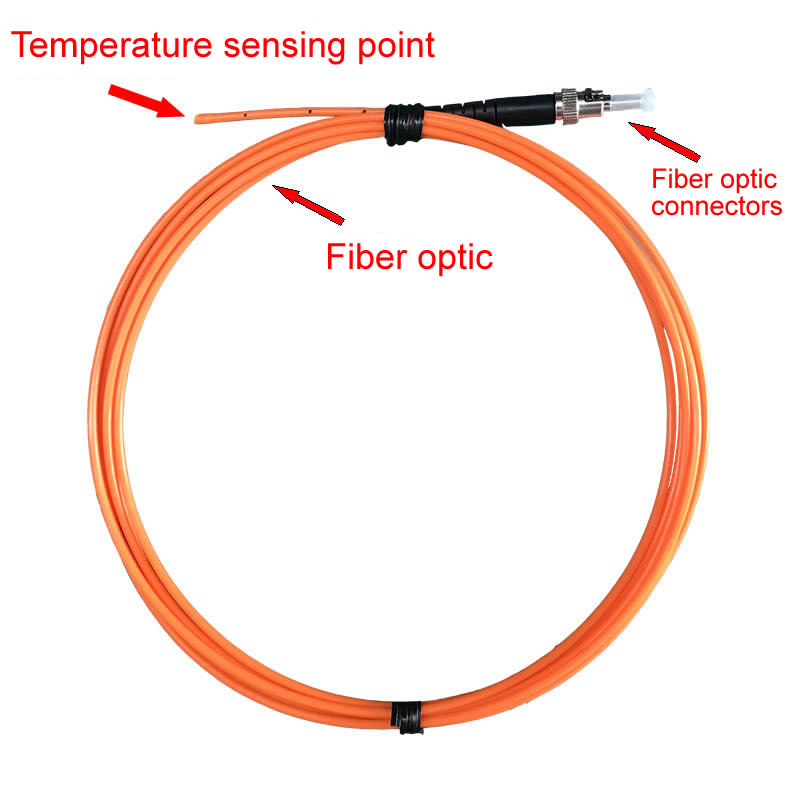
1.1 Application field requirements
Special environmental adaptability
If it is in an electromagnetic/radio frequency environment, traditional temperature measurement methods may be severely interfered with and unable to work properly. Fiber optic sensors have become a good choice due to their anti electromagnetic interference characteristics. على سبيل المثال, in the power system, areas near high-voltage cables or electrical equipment have strong electromagnetic fields, and fiber optic sensors can stably measure temperature without electromagnetic interference, ضمان دقة القياس والموثوقية.
عندما تكون هناك حالات خطرة مثل القابلية للاشتعال, الانفجارية, والتآكل في بيئة القياس, هناك متطلبات خاصة للسلامة/مقاومة التآكل. أجهزة استشعار الألياف الضوئية, بسبب افتقارها إلى مخاطر السلامة مثل الشرر الكهربائي, وبعض أجهزة استشعار الألياف الضوئية يمكن أن تتمتع بمقاومة للتآكل من خلال اختيار المواد (مثل الطلاءات الخاصة أو الأغماد), مناسبة لسيناريوهات مثل مراقبة درجة حرارة صهاريج التخزين في المصانع الكيميائية وقياس درجة الحرارة في البيئات القابلة للاشتعال والانفجار مثل آبار النفط.
في بعض بيئات التثبيت ذات المساحة المحدودة والمتطلبات الخاصة لحجم المستشعر, يمكن لأجهزة استشعار الألياف الضوئية تحقيق قياس دقيق بحجمها الأصغر. يمكن لأجهزة استشعار الألياف الضوئية أن تتكيف بشكل جيد مع المساحات الصغيرة للكشف عن درجة الحرارة, such as temperature monitoring inside small electronic devices and precision instruments.
Measurement accuracy and sensitivity requirements
Fiber optic sensors are a suitable choice for situations with particularly high requirements for accuracy, حساسية, عمر, الاستقرار / الموثوقية, إلخ. على سبيل المثال, في المجال الطبي, fiber optic sensors can be used to measure the temperature of internal tissues in the human body. Their high precision and sensitivity can meet the requirements of life science measurement, and play an important role in the study of temperature regulation mechanisms or temperature monitoring during thermal therapy for certain diseases.

1.2 Selection of Measurement Points and Sensor Types
The choice between single point and distributed
When there are less than 50 نقاط القياس, أ “نقطة واحدة” sensor is usually used. على سبيل المثال, when monitoring the temperature of a single small device (such as a single dry-type transformer) or a small capacity liquid container, a single point sensor can meet the requirements. Single point sensors have a small volume and relatively low cost, and have advantages in limited space layout and cost budget. A single point fiber optic sensor is sufficient for temperature monitoring needs, such as measuring water temperature in a small aquarium for household use.
عندما يكون هناك أكثر من 50 نقاط القياس, “موزعة” sensors are usually used. على سبيل المثال, in monitoring the indoor temperature distribution of numerous floors and different rooms in large buildings, or in monitoring the temperature field of bridges (where numerous measurement points are distributed in different parts of the bridge), distributed fiber optic sensors can continuously obtain temperature information from multiple points through a single fiber optic cable. Although the cost of a single sensor may be higher than that of a single point sensor, it is a better choice for the total cost and data acquisition efficiency of a large number of measurement points. على سبيل المثال, in the server room of a data center, in order to comprehensively monitor the temperature of a large number of servers, distributed fiber optic sensors can cover numerous monitoring points at once, effectively reducing the number of sensors, avoiding space occupation, and achieving efficient temperature monitoring.
1.3 نطاق درجة الحرارة, دقة, and Resolution Requirements
مطابقة نطاق درجة الحرارة
Choose a suitable fiber optic sensor based on the actual temperature range measured. The temperature measurement range of sensors is generally divided into four sections: -40-+80 درجه مئوية- 40 – +250درجه مئوية;- 40 – +400درجه مئوية;+ 20-+60 درجه مئوية (طبي). على سبيل المثال, in general indoor temperature monitoring (usually between -10 درجه مئوية -+40 درجه مئوية), most fiber optic sensors can meet the requirements; قد تتطلب مراقبة درجة الحرارة بالقرب من الأفران الصناعية أجهزة استشعار قادرة على قياس نطاقات درجات الحرارة المرتفعة (مثل -40-+400 درجة مئوية أو أعلى); في الطب, أجهزة الاستشعار ذات نطاق درجة حرارة ضيق يتراوح بين +20-+60 درجة مئوية مناسبة لمراقبة العلاج الحراري في أجزاء معينة من جسم الإنسان, مثل الدماغ.
اعتبارات الدقة والقرار
تنقسم متطلبات الدقة لقياس درجة الحرارة عادة إلى خمسة مستويات: ± 0.05 درجه مئوية, ± 0.1 درجه مئوية, ± 0.3 درجه مئوية, ± 0.5 درجه مئوية, و ± 1 درجه مئوية. في بعض الحالات التي تكون حساسة جدًا للتغيرات في درجات الحرارة, مثل المعدات التجريبية عالية الدقة (مثل الأجهزة المخبرية التي تتطلب التحكم الدقيق في درجة حرارة التفاعل الكيميائي) أو المعدات الطبية المتقدمة (مثل مراقبة درجة الحرارة في بعض عمليات ارتفاع حرارة الورم الدقيقة), فمن الضروري اختيار أجهزة استشعار الألياف الضوئية بدقة عالية (such as ± 0.05 ℃ or ± 0.1 درجه مئوية); In general industrial or civilian environments where precision requirements are not extremely high (such as room temperature monitoring in ordinary factories or indoor temperature measurement in ordinary households), sensors with a precision of ± 0.5 ℃ or ± 1 ℃ may already be sufficient to meet the requirements. In terms of resolution, high-resolution sensors can detect even smaller temperature changes, making them more suitable for precise measurement of temperature changes.

1.4 Working types of probes
Immersion probe
يمكن استخدام أجهزة استشعار الغمر لقياس درجة حرارة المواد الصلبة, السوائل, والغازات. In industry, immersion sensors are more suitable for measuring the temperature of industrial liquid tanks. Immersion sensors have undergone special treatment, and the optical fiber has strong strength and toughness, والتي يمكن أن تقاوم التآكل الكيميائي في خزانات السوائل. على سبيل المثال, in the storage tanks of chemical raw materials, immersion type fiber optic sensors can work stably in chemical solutions for a long time and accurately measure liquid temperature. علاوة على ذلك, this probe can effectively measure the water temperature in fish tanks (liquid environment), the temperature field in ovens (gas environment), or the temperature of soil (solid environment).
Contact type probe
أجهزة استشعار الاتصال متخصصة في قياس درجة حرارة أسطح الأشياء, مثل مراقبة درجة حرارة المعدات ذات الجهد العالي مثل المحولات من النوع الجاف, المفاتيح الكهربائية ذات الجهد العالي, وقضبان التوصيل ذات الجهد العالي. In the operation and maintenance of power system equipment, by attaching contact type fiber optic sensors to the surface of the equipment, the temperature changes on the equipment surface can be obtained at any time, so as to timely detect overheating problems, prevent faults, and ensure the safe and stable operation of the power system.
Medical probe
تم تصميم أجهزة الاستشعار الطبية خصيصًا لقياسات علوم الحياة, مع تحقيقات صغيرة ورقيقة ذلك, عند إقرانها بأجهزة إزالة التشكيل المخصصة, يمكن أن يحقق سرعات استجابة سريعة ودقة عالية جدًا. In clinical medicine, على سبيل المثال, when measuring the local temperature of certain organs inside the human body (such as the heart and liver) or monitoring the temperature of transplanted tissues, medical fiber optic sensors can avoid causing excessive trauma to the human body and achieve accurate temperature measurement.
2. Key points for selecting fluorescent fiber optic sensors
2.1 Principles and Characteristics
مبدأ
مستشعر درجة حرارة الألياف الضوئية الفلورسنت is a temperature measurement sensor based on the principle of fluorescence. Fluorescent materials are materials that can absorb light of a certain wavelength and emit light of longer wavelengths. When fluorescent materials are affected by temperature changes, their fluorescence characteristics will also change. A typical fluorescent fiber optic temperature sensor includes several parts such as light source, الألياف الضوئية, fluorescent material, and spectrometer. أولاً, the light source generates excitation light of a certain wavelength, which is transmitted to the fluorescent material through optical fibers. After absorbing excitation light, fluorescent materials emit fluorescent signals with specific wavelengths, which are transmitted back to the spectrometer for detection through optical fibers. عندما تتغير درجة الحرارة, the fluorescence characteristics of fluorescent materials may be a change in fluorescence intensity or a shift in fluorescence wavelength. The temperature value can be determined by measuring the intensity or wavelength of the fluorescence signal.
characteristic
دقة عالية: المواد الفلورية حساسة بشكل خاص للتغيرات في درجات الحرارة, تتمتع أجهزة استشعار درجة حرارة الألياف الفلورية بدقة قياس عالية. This high precision is very important in some scenarios that are sensitive to subtle temperature changes, such as cell culture temperature monitoring in biomedicine. Even small temperature deviations may affect cell growth and experimental results. Fluorescent fiber optic sensors can accurately detect temperature changes and ensure the stability of the experimental environment.
استجابة سريعة: Fluorescent fiber optic temperature sensors have a fast response speed, يمكن مراقبة التغيرات في درجات الحرارة في الوقت الحقيقي, والرد على الفور. In some real-time demanding situations, such as temperature monitoring during rapid chemical reactions, it is necessary to obtain temperature change information in a timely manner to adjust reaction conditions. Fluorescent fiber optic sensors can quickly respond to temperature changes and ensure the normal progress of the reaction.
القياس الموزع: Fluorescent fiber optic temperature sensors can monitor temperatures at multiple locations simultaneously through a single fiber optic cable. This distributed detection capability makes sensors very useful in situations where multiple points need to be monitored. على سبيل المثال, in a large refrigerated warehouse, the temperature at different locations needs to be monitored simultaneously. Fluorescent fiber optic sensors use a single fiber optic to arrange fluorescent materials at different locations to achieve distributed temperature monitoring at multiple points, reducing wiring costs and complexity.
قدرة قوية ضد التدخل: في البيئات الكهرومغناطيسية المعقدة, traditional temperature sensors may be affected by interference signals, while fluorescent fiber optic temperature sensors can work normally without being affected by interference signals. على سبيل المثال, in industrial environments with many electromagnetic devices or temperature monitoring around power substations, fluorescent fiber optic sensors can stably obtain temperature values.
الاستقرار على المدى الطويل: تتمتع مواد الفلورسنت بمتانة واستقرار قويين, ويمكن لأجهزة الاستشعار الحفاظ على استقرار الأداء العالي أثناء الاستخدام طويل الأمد. مناسبة لبيئات العمل المستمر على المدى الطويل, مثل مراقبة درجة حرارة معدات استكشاف أعماق البحار (التعرض طويل الأمد للبيئات القاسية تحت الماء) أو محطات الرصد الجيوفيزيائية طويلة المدى (تتطلب جمع البيانات على المدى الطويل).
نطاق درجة حرارة واسعة: أجهزة استشعار درجة حرارة الألياف الضوئية الفلورية مناسبة لمجموعة واسعة من درجات الحرارة البيئية, من درجة منخفضة تصل إلى سالب بايدو إلى عدة مئات من الدرجات المئوية. يمكن أيضًا استخدام مستشعرات الألياف الضوئية الفلورية لمراقبة درجة حرارة معدات البحث العلمي في بيئات درجات الحرارة القصوى, مثل بالقرب من الفتحات البركانية ذات درجة الحرارة المرتفعة أو في مناطق القطب الجنوبي الباردة.
مرونة عالية: يمكن اختيار المواد الفلورية لأجهزة الاستشعار وتصميمها وفقًا للاحتياجات الفعلية لتلبية احتياجات مختلف مجالات التطبيق المحددة. على سبيل المثال, specific fluorescent materials can be selected for different chemical systems to adapt to temperature measurement in chemical environments and improve the adaptability of sensors.
2.2 Selection and Application Considerations
Priority should be given to situations with few measurement points
According to the correlation between the number of measurement points and the type of sensor mentioned earlier, when the number of measurement points is less than 50, أ “نقطة واحدة” sensor is usually used, and fluorescent sensors belong to the single point sensor type. In scenarios such as temperature monitoring of small devices, such as internal temperature monitoring of household appliances (such as electric kettles, hair dryers, إلخ.), or temperature measurement of individual small reaction vessels in laboratories, fluorescent fiber optic sensors have advantages in cost control and installation convenience due to the small number of measurement points.
Suitable for scenarios with high requirements for response speed and accuracy
If the response speed and accuracy requirements for temperature measurement are high in specific application scenarios, such as in some precision medical equipment (such as high-precision ophthalmic laser treatment equipment internal temperature monitoring or blood vessel temperature monitoring during heart bypass surgery), fluorescent fiber optic sensors can meet the requirements due to their fast response and high-precision characteristics.
Not suitable for situations with a large number of measurement points
Due to the fact that fluorescent fiber optic sensors are mostly single point type, if temperature monitoring is required for a large number of points (such as more than 50 نقاط القياس), using fluorescent fiber optic sensors will result in higher costs. In this case, it is more suitable to choose distributed sensors, such as in temperature monitoring scenarios of hundreds of equipment nodes in large industrial plants or numerous rooms in large buildings.
3. Key points for selecting distributed fiber optic sensors
3.1 Principles and Basic Components
مبدأ
In distributed fiber optic sensing technology, fiber optic is both a sensing medium and a data transmission medium. By utilizing the characteristics of light waves transmitted in fiber optic, continuous sensing measurements can be taken along the length direction of the fiber optic. With the help of changes in light waves, environmental physical parameters such as temperature, أَضْنَى, ضغط, إلخ. can be extracted to obtain information on the spatial distribution status of the measured object over time. The main principles of distributed fiber optic sensing technology include sensing technology based on optical interference principle and sensing technology based on scattering principles such as Rayleigh, بريلوين, رامان, إلخ. This article focuses on the optical frequency domain reflectometry (OFDR) technology based on Rayleigh scattering, which indirectly reflects the strain of structural components by sensing the strain of optical fibers arranged on them. The measured strain is actually transmitted from the structural components to the strain on the optical fibers. When demodulating temperature or strain in distributed fiber optic sensors, OFDR technology shows that both strain and temperature are demodulated by Rayleigh scattering frequency shift signals in the fiber optic. مبدئيا, strain signals and temperature signals cannot be distinguished. لذلك, different sensing fibers need to be used to distinguish strain and temperature during testing.
Basic Composition
The commonly used distributed fiber optic sensors on the market are bare fiber optic sensors or distributed fiber optic cable sensors that are encapsulated and armored on the outer layer of bare fiber optic cables. عمومًا, bare optical fibers are composed of a core, a cladding, and a coating layer. The core and cladding are made of silicon dioxide with different refractive indices. The refractive index of the core is greater than that of the cladding. When the incident light satisfies the total reflection angle in the fiber, it can propagate in the fiber. The coating material is generally acrylic ester, which mainly serves to protect the optical fiber from external damage and increase its toughness, thereby extending the service life of the optical fiber. يتكون كابل الاستشعار الضوئي الموزع من غلاف خارجي ملفوف حول الألياف الضوئية العارية, ومواد الغلاف الخارجي في الغالب من البلاستيك (مثل بي, PVC, بتف, اي تي في اي, إلخ.). وتتمثل مهمتها الرئيسية في تعزيز القوة الهيكلية لأجهزة استشعار الألياف الضوئية الموزعة وتمكينها من البقاء بشكل أفضل في البيئات القاسية.
3.2 Selection and Application Considerations
عدد كبير من نقاط القياس وحالة الطلب الموزعة
عندما يكون هناك أكثر من 50 نقاط القياس, “موزعة” عادة ما يتم استخدام أجهزة الاستشعار مثل أجهزة استشعار شبكة الألياف Bragg. في مراقبة مجال درجة الحرارة للهياكل الهندسية الكبيرة مثل جسور المسافات الطويلة, الأنفاق, and large buildings, هناك العديد من نقاط القياس. وزعت أجهزة استشعار الألياف الضوئية يمكن تخطيط الألياف على طول الهيكل بأكمله للحصول على كمية كبيرة من بيانات درجة الحرارة من كل نقطة مرة واحدة, تحقيق مراقبة شاملة لتوزيع درجة الحرارة. على سبيل المثال, على جسر عبور بحري يمتد لعدة كيلومترات, installing distributed fiber optic sensors at different parts of the bridge body can promptly detect temperature anomalies in problematic areas caused by environmental temperature changes or internal thermal stress, which is of great significance for the safe maintenance of the bridge.
Adapt to complex environments and long-term monitoring scenarios
Distributed fiber optic sensors have advantages such as non electrification, حجم صغير, القدرة على الانحناء, مقاومة التداخل الكهرومغناطيسي, حساسية عالية, ومقاومة التآكل. Temperature monitoring of long-distance pipelines or cables is very suitable in some complex electromagnetic environments, such as around high-voltage substations, large electromagnetic factory workshops, إلخ; It can also be used for temperature monitoring in environments with strong corrosion, such as underground sewage pipelines, chemical raw material transportation pipelines, إلخ. علاوة على ذلك, in large-scale mining sites or underground cavities where temperature monitoring is of equal length, distributed fiber optic sensors can effectively meet monitoring needs due to their good adaptability and long-distance installation characteristics.
Selection criteria for fiber type and sheath material
Fiber optic type:
Some common single-mode fiber models on the market, such as G652 and G657 series fibers, can be used as sensors based on Rayleigh scattering OFDR technology. The difference between the two is that G657 series fibers are bend resistant fibers, which have smaller bending losses compared to G652 series at the same bending radius. For some engineering testing sites or complex structural testing, fiber optic sensors inevitably experience some bending losses during deployment. لذلك, for OFDR technology, choosing G657 series fiber optic as the sensor has more advantages than G652 series fiber optic.
When precise structural strain testing is required or when sensing accuracy can be guaranteed while protecting the optical fiber from damage, PI fiber (polyimide fiber) can be used as the sensor because the strain transmission effect of its coating material is comparable to that of bare fiber, and better than that of ordinary fiber (acrylic coating). In some ordinary measurement scenarios, if the accuracy requirements are not particularly high, ordinary single-mode fiber can meet the requirements. For temperature measurement optical fibers, loose sheathed optical fibers are generally selected, which consist of a 0.9mm hollow sheath on the outside and a 165um PI optical fiber in the center. This allows the optical fiber to move freely in the sheath, and the strain generated by the outside is shielded by the outer sheath. لذلك, loose sheathed optical fiber sensors can only test changes in external temperature. For strain testing in a constant temperature environment, bare fiber or sheathed fiber can generally meet the requirements. The specific choice of fiber can depend on the actual application scenario; For strain testing in variable temperature environments, it is necessary to use temperature compensation optical fibers for testing. على سبيل المثال, أ temperature compensation optical fiber composed of two optical fiber sensors, one of which is a tightly sheathed optical fiber and the other is a loosely sheathed optical fiber. The tightly sheathed optical fiber is affected by both temperature and strain, while the loosely sheathed optical fiber is only affected by temperature. By subtracting the two, the strain generated by the optical fiber can be obtained.
Sheath material:
في البيئات القاسية, if bare optical fibers are no longer suitable for use due to their thinness and susceptibility to damage, tight sheathed optical cables need to be selected to ensure survival rates. Although tight sheathed optical cables have higher structural strength compared to bare optical fibers, their strain transmission loss is greater than that of bare optical fibers, and the loss of strain transmission increases with the increase of sheath diameter. The conventional types of tight sheathed optical fibers include 0.9mm diameter, 2قطر مم, and even larger diameter armored optical cables. عادة, under the condition of ensuring the survival of fiber optic sensors, it is recommended to prioritize the use of tightly sheathed fibers with smaller diameters as sensors to ensure better sensing performance. فضلاً عن ذلك, the sheath material should be selected according to the actual temperature environment. Different sheath materials (مثل بي, PVC, بتف, اي تي في اي, إلخ.) have different temperature resistance properties. على سبيل المثال, in high temperature environments, it may be necessary to choose sheath materials that can withstand high temperatures to protect the optical fiber and ensure the normal operation of the sensor.
4. Key points for selecting fiber Bragg grating sensors
4.1 Principles and Characteristics
مبدأ
Fiber Bragg Grating sensor is a type of sensor used for measuring and monitoring physical quantities. Its principle is to use a grating structured optical fiber to interfere with the reflected light of the incident light. By measuring the phase difference of the interference light and comparing it with the template grating, the measured physical quantity can be obtained. In terms of temperature measurement, when the external temperature changes, the period or refractive index of the fiber Bragg grating will change, resulting in a wavelength shift of the reflected light. By detecting the wavelength shift, the temperature change value can be obtained.
characteristic
حساسية عالية: capable of measuring subtle temperature changes. In some devices or environments that are sensitive to temperature changes (such as high-precision optical instrument internal temperature monitoring, low-temperature storage environment temperature monitoring of biological samples, إلخ.), even small temperature fluctuations may affect device performance or sample preservation effectiveness. Fiber Bragg grating sensors can accurately detect these subtle changes and issue timely warnings or adjust control measures.
High resolution: able to detect the absolute value of small changes. It performs well in monitoring small temperature differences, such as in the study of heat dissipation performance of electronic chips, where precise understanding of the small temperature differences at various points on the chip surface is required. Fiber Bragg grating sensors can provide high-precision temperature resolution to meet research needs.
دقة عالية: It can obtain high-precision measurement results, which is very important in many precision experiments, industrial production process control (مثل التحكم في درجة الحرارة في عمليات تصنيع الزجاج عالية الدقة, حيث قد تؤثر الانحرافات الصغيرة في درجات الحرارة على جودة الزجاج), أو المعدات الطبية المتطورة (مثل إدارة درجة الحرارة الداخلية لبعض معدات العلاج بالليزر الخاصة) سيناريوهات, مما يساعد على ضمان دقة العملية وجودة المنتجات والمعدات.
High stability: تتمتع مستشعرات شبكة الألياف Bragg بثبات عالي ويمكنها الحفاظ على الدقة حتى في القياسات طويلة المدى. في سيناريوهات مراقبة درجة الحرارة المستمرة على المدى الطويل, مثل مراقبة درجة حرارة معدات الطيران أثناء مهام الطيران طويلة المدى, تسجيل درجات الحرارة على المدى الطويل لمحطات الرصد الجوي, إلخ., يمكن لأجهزة استشعار شبكة Bragg المصنوعة من الألياف أن تعمل بشكل موثوق وتخرج بيانات دقيقة لدرجة الحرارة بشكل ثابت.
خالية من التداخل الكهرومغناطيسي: لأن نقل الإشارة يتم من خلال الإشارات الضوئية, لا تتأثر مستشعرات شبكة الألياف Bragg بسهولة بالتداخل الكهرومغناطيسي. وهذا يجعلها عملية جدًا لقياس درجة الحرارة في البيئات الكهرومغناطيسية القوية, مثل داخل المحطات الفرعية لنظام الطاقة, ورش تصنيع المعدات الكهرومغناطيسية الكبيرة, إلخ., دون أن تتأثر بسهولة بالتداخل الكهرومغناطيسي وأخطاء القياس مثل أجهزة الاستشعار الإلكترونية التقليدية.
4.2 Selection and Application Considerations
النظر في متطلبات التنوع لقياس الكميات الفيزيائية
يمكن استخدام مستشعرات شبكة الألياف Bragg ليس فقط لمراقبة درجة الحرارة, ولكن أيضًا لقياس الكميات الفيزيائية الأخرى مثل مراقبة الإجهاد. في بعض سيناريوهات التطبيق العملي, مثل هياكل المباني الكبيرة أو المعدات الميكانيكية, if it is necessary to monitor the temperature of these structures while also understanding the strain of the structure, fiber Bragg grating sensors can simultaneously measure multiple physical quantities such as temperature and strain. على سبيل المثال, in the health monitoring of bridge structures, fiber Bragg grating sensors are distributed along the bridge body, which can simultaneously obtain temperature and strain data from different parts, comprehensively judge the structural status of the bridge, and have important significance for predicting and preventing possible damage, fatigue and other problems of the bridge.
Suitable for a large number of measurement points and distributed measurement scenarios
Fiber Bragg grating sensors can work well when involving a large number of measurement points. Similar to distributed fiber optic sensors, in large-scale industrial sites, building facilities, and other scenarios that require numerous measurement points, fiber optic grating sensors can use multiplexing technology to set multiple gratings on a single fiber to achieve temperature measurement at different positions. على سبيل المثال, in large thermal power plants, numerous equipment and pipelines are distributed over a wide area. By reasonably arranging fiber optic grating sensor networks, temperature monitoring of key locations of different equipment and pipelines throughout the power plant can be achieved, which helps to improve the safety and efficiency of equipment operation.
Balancing cost and performance requirements
Although fiber Bragg grating sensors have many excellent properties, their prices are relatively high. In some cost sensitive application scenarios, it is necessary to balance the relationship between performance and cost. على سبيل المثال, in some civilian ordinary building indoor temperature monitoring needs, if only the approximate changes in the overall indoor temperature are obtained, the high accuracy and performance of fiber Bragg grating sensors may not be required. In this case, low-cost traditional temperature sensors can be chosen; In some high-end industrial production or scientific research scenarios, high performance requirements such as accuracy and reliability of temperature measurement are required, and the high-performance advantages of fiber Bragg grating sensors can be fully reflected when the budget allows.
5. Comparative analysis of different types of fiber optic sensors
5.1 Differences in Measurement Principles
Principle of Fluorescent Fiber Optic Sensor
Based on the fluorescence intensity or wavelength changes of fluorescent materials under temperature changes, temperature detection is achieved by transmitting signals through optical fibers. The light emitted by the light source is transmitted to the fluorescent material through optical fibers. After absorbing the excitation light, the fluorescent material emits fluorescence signals of different intensities or wavelengths according to temperature changes, which are then transmitted to the spectrometer for detection through optical fibers.
Principle of Distributed Fiber Optic Sensor
Fiber optic is both a sensing medium and a transmission medium, and continuous sensing and measurement are carried out along the fiber optic cable through the transmission characteristics of light waves in the fiber optic cable. Taking the OFDR technology based on Rayleigh scattering as an example, by demodulating the Rayleigh scattering signal in the optical fiber and obtaining information on changes in physical parameters such as temperature, it is not possible to directly distinguish between strain and temperature signals. Different types of optical fibers need to be selected for different measurement scenarios, such as loose sheathed optical fibers for temperature measurement.
Principle of Fiber Bragg Grating Sensor
By using a grating structured fiber to reflect and interfere with incident light, temperature changes can cause a change in the period or refractive index of the fiber grating, resulting in a wavelength shift of the reflected light. The temperature change value can be obtained by measuring the wavelength shift.
5.2 Performance Characteristics Comparison
دقة القياس
مستشعر صريف الألياف: من الناحية النظرية, it has high accuracy, which mainly depends on the control of grating period spacing and effective refractive index, as well as the linearity of the measurement process. When the machining accuracy is guaranteed, due to its direct linear conversion relationship measurement, its accuracy is easy to guarantee, والضوء المنعكس حاد في مجال التردد, مما يجعل قياس الخط الطيفي المركزي أكثر دقة. وله مزايا في السيناريوهات التي تتطلب دقة عالية, مثل مراقبة درجة حرارة المعدات الطبية المتطورة أو الأبحاث المخبرية عالية الدقة.
مستشعر الألياف الضوئية الفلورسنت: تعتمد دقة القياس بشكل أساسي على خصائص مادة الفلورسنت المثارة لإصدار الفلورسنت واكتشاف التغيرات في شدة الفلورسنت. حالياً, المستوى التكنولوجي يجعل دقتها قابلة للمقارنة مع الاثنين الآخرين, ولكن في التطبيقات العملية, تتأثر الدقة أيضًا بعوامل مثل المواد, مستوى المعالجة, ودقة إشارة المستخلص. إنها مناسبة للسيناريوهات العامة عالية الدقة حيث لا تكون متطلبات الدقة هي الأعلى, مثل مراقبة درجة حرارة المعدات الصناعية العامة.
أجهزة استشعار الألياف الضوئية الموزعة: The accuracy is mainly affected by the detection technology used (such as OFDR technology based on Rayleigh scattering), the type of fiber optic (such as different coating layers, مواد غمد, إلخ.), and the influence of the application environment on the sensing signal. In some long-distance distributed measurement scenarios, although the single point accuracy may not be as good as fiber Bragg grating sensors, it can provide overall temperature distribution, which is suitable for large-scale temperature monitoring scenarios where accuracy requirements are not extremely high, such as temperature field monitoring of large buildings.
response speed
مستشعر صريف الألياف: A high-performance demodulation and demultiplexing receiver is required, وغالباً ما تؤثر قدرة المعالجة لدى جهاز الاستقبال على تردد استجابته. Relatively speaking, its response speed is affected by its complex wavelength shift detection technology and other factors. In scenarios with high real-time requirements for response speed, it may not be as good as fluorescent fiber optic sensors.
مستشعر الألياف الضوئية الفلورسنت: It has the characteristic of fast response and can quickly respond to temperature changes, mainly due to its direct detection principle based on fluorescence characteristics. It performs better in scenarios with high real-time temperature monitoring requirements, such as temperature control in certain chemical reaction processes or temperature monitoring in biological rapid reaction processes.
أجهزة استشعار الألياف الضوئية الموزعة: Their response speed is affected by various factors such as fiber type, detection technology, إلخ. لكن, in the distributed measurement process, they can continuously monitor temperature at different points. Although the response speed of a single point may not be very fast, it can meet the requirements for obtaining the overall temperature distribution under a certain sampling period. It is particularly suitable for long-term temperature stability monitoring scenarios such as large structures.
نطاق القياس (distributed characteristics)
مستشعر صريف الألياف: Multiple gratings can be set on a single optical fiber through multiplexing technology to achieve measurement of multiple points. لكن, compared to fluorescent fiber optic sensors, its distributed measurement capability relies more on networking technology and equipment support, and is limited by factors such as cost. على سبيل المثال, the number of gratings that can be set at a certain cost is limited, but it performs well in terms of single measurement point accuracy. It is suitable for distributed measurement scenarios that require single point accuracy and have relatively fewer measurement points, such as temperature and strain measurement of hundreds of key nodes in some bridge structures.
مستشعر الألياف الضوئية الفلورسنت: It has a certain distributed measurement capability and can simultaneously monitor the temperature of multiple locations through a single fiber optic cable. لكن, it is relatively weak in requiring large-scale, long-distance distributed measurement and is more suitable for temperature monitoring of multiple measurement points in small-scale, relatively concentrated areas, such as temperature monitoring of numerous devices in a small factory workshop.
Distributed fiber optic sensor: specially designed for distributed measurement, with the advantage of being able to achieve continuous long-distance and large-scale temperature distribution measurement along the fiber optic cable. It is suitable for comprehensive temperature field monitoring of large engineering structures such as underground comprehensive pipe galleries (آلاف الأمتار أو حتى أطول) وجسور عبور البحر الطويلة جدًا.
5.3 مقارنة التكلفة والتعقيد
يكلف
مستشعر صريف الألياف: التكلفة مرتفعة نسبيا, ويرجع ذلك أساسًا إلى متطلبات الأداء العالي مثل الدقة العالية والثبات, مما يؤدي إلى ارتفاع التكاليف في عمليات التصنيع, ملحقات المعدات, وجوانب أخرى. في السيناريوهات التي تكون فيها الميزانية محدودة ومتطلبات الأداء مثل الدقة ليست عالية جدًا, قد لا تكون فعاليتها من حيث التكلفة عالية, مثل سيناريوهات رصد درجات الحرارة في بعض المباني السكنية العادية.
مستشعر الألياف الضوئية الفلورسنت: بتكلفة معتدلة وبنية بسيطة نسبيًا, إنه خيار فعال من حيث التكلفة في السيناريوهات التي تلبي فيها الدقة والأداء المتطلبات, مثل مراقبة درجة حرارة المعدات الصناعية العامة أو إدارة درجة حرارة المنشآت التجارية الصغيرة.
أجهزة استشعار الألياف الضوئية الموزعة: التكلفة تعتمد على مقياس القياس, required fiber optic type, and supporting demodulation equipment. In large-scale measurement scenarios, although the cost of a single distributed fiber optic sensor may not be low, it may have a cost advantage over a single point sensor in achieving measurements of the same scale due to its ability to cover a large number of measurement points; لكن, in small-scale measurement scenarios, the cost is relatively high. على سبيل المثال, when monitoring the temperature of several individual small devices, using distributed fiber optic sensors is a waste of cost.
تعقيد
مستشعر صريف الألياف: It uses a grating to sense temperature changes, and the system involves complex wavelength shift detection technology, requiring complex demodulation equipment to accurately measure the wavelength changes of reflected light. The complexity of equipment and technology is relatively high, كما أن المستوى الفني للمشغلين ومتطلبات صيانة المعدات مرتفع نسبيًا أيضًا.
مستشعر الألياف الضوئية الفلورسنت: الهيكل ومبدأ العمل بسيطان نسبيًا, تنتمي إلى طريقة الكشف عن شدة الضوء. لا يتطلب الأمر سوى مصدر ضوء لإثارة التألق ومن ثم اكتشاف التغيرات في شدة التألق أو الطول الموجي. أنها لا تتطلب معدات وتكنولوجيا إزالة التشكيل المعقدة, ولها تكاليف صيانة منخفضة وصعوبات تشغيلية.
أجهزة استشعار الألياف الضوئية الموزعة: فيما بينها, تعتبر تقنيات الكشف مثل OFDR المعتمدة على تشتت رايلي معقدة نسبيًا, تتضمن إزالة تشكيل دقيقة لإشارات تشتت رايلي في الألياف الضوئية, واختيار خاص وإعدادات لأنواع الألياف (مثل طبقات الطلاء, الأغماد, إلخ.) مطلوبة في سيناريوهات القياس المختلفة, مما أدى إلى تعقيد كبير في الاستخدام والصيانة.

مستشعر درجة حرارة الألياف الضوئية, نظام مراقبة ذكي, الشركة المصنعة للألياف الضوئية الموزعة في الصين
|
|
 |