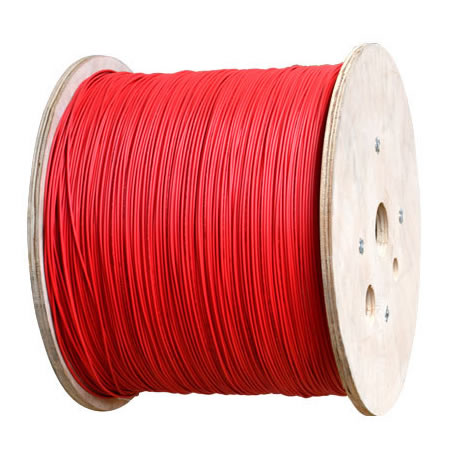
أجهزة استشعار درجة حرارة الألياف الضوئية INNO ,أنظمة مراقبة درجة الحرارة.
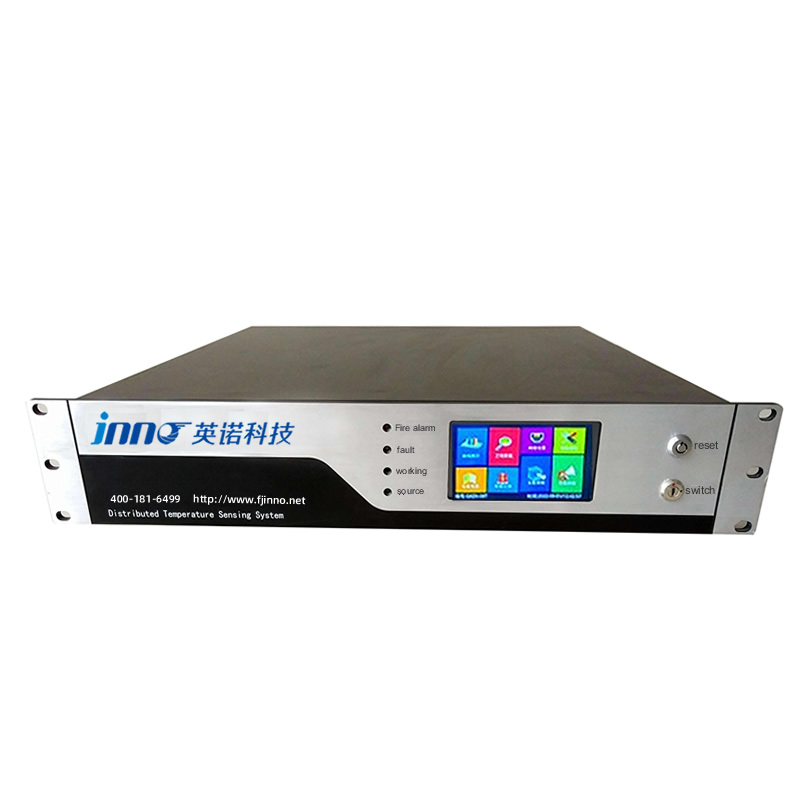
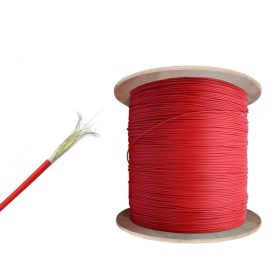

يعتمد نظام قياس درجة حرارة الألياف الضوئية الموزعة على تقنية الإلكترونيات الضوئية المتقدمة, تكنولوجيا الاتصالات, تكنولوجيا المعالجات الدقيقة, تكنولوجيا استشعار درجة الحرارة الرقمية, ومصممة بشكل فريد لدرجات الحرارة المنخفضة, مجال كهربائي قوي, وتكنولوجيا تشغيل البيئة الرطبة. يمكنه مراقبة درجة الحرارة في بيئات مختلفة بشكل منفصل, الكشف عن مخاطر الحوادث في وقت مبكر, وتقليل الخسائر. في نفس الوقت, يمكنه أيضًا توفير كمية كبيرة من بيانات المراقبة عبر الإنترنت, توفير أساس موثوق للمشغلين لفهم تشغيل خطوط أنابيب التدفئة بشكل شامل.
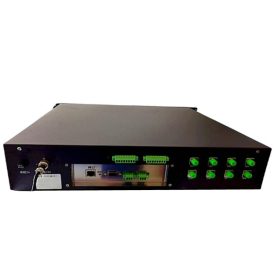
ال الألياف الضوئية الموزعة محلل درجة حرارة الاستشعار هو الجسم الرئيسي لنظام قياس درجة حرارة الألياف الضوئية الموزعة DTS. The fiber optic temperature measurement host is responsible for the signal acquisition, معالجة الإشارات, تحليل البيانات, أكثر من إنذار درجة الحرارة, network transmission and other functions of the entire system. It is composed of an optical frequency generator, switching power supply, microprocessor, network interface, إلخ., and is the core device for photoelectric conversion and information processing.
Fully distributed: DTS can detect the complete temperature distribution along the entire fiber optic cable in seconds without any omissions.
Long distance monitoring: Single mode and multi-mode monitoring hosts, with a maximum length of 40 كيلومترات.
Electromagnetic inertness: Temperature measuring optical fibers are composed of quartz, electrically insulated, not subject to any electrical interference, and do not emit electromagnetic waves, making them particularly suitable for various complex and strong electrical environments.
السلامة الجوهرية: The temperature sensing element is a temperature measuring optical fiber, and the average power of the optical signal transmitted internally is at the micro watt level; السلامة الجوهرية
تحديد المواقع بدقة: The positioning accuracy reaches ± 1M.
استجابة سريعة: Single channel scanning time less than 3 ثواني
The temperature measurement of DTS is most based on the spontaneous Raman scattering effect. After high-power narrow pulse laser pulse LD is incident on the sensing fiber, the laser interacts with the fiber molecules, producing extremely weak backscattered light. The scattered light has three wavelengths, namely Rayleigh, anti Stokes, and Stokes light: anti Stokes is temperature sensitive, is signal light; Stokes is temperature insensitive, is reference light. The backscattered signal light from the sensing fiber passes through the splitter module WF and the isolated Rayleigh scattered light again. It passes through the temperature sensitive anti sokes signal light and the temperature insensitive Stokes reference light, and is received by the same detector (APD). The temperature can be calculated based on the ratio of the two light intensities. The determination of the position is based on the optical time-domain reflection OTDR technology, which uses high-speed data acquisition to measure the echo time of the scattered signal and determine the fiber position corresponding to the scattered signal.
Distributed fiber optic temperature measurement application scenarios

Introduction to Distributed Fiber Optic Temperature Measurement System for Cable Trenches and Cables
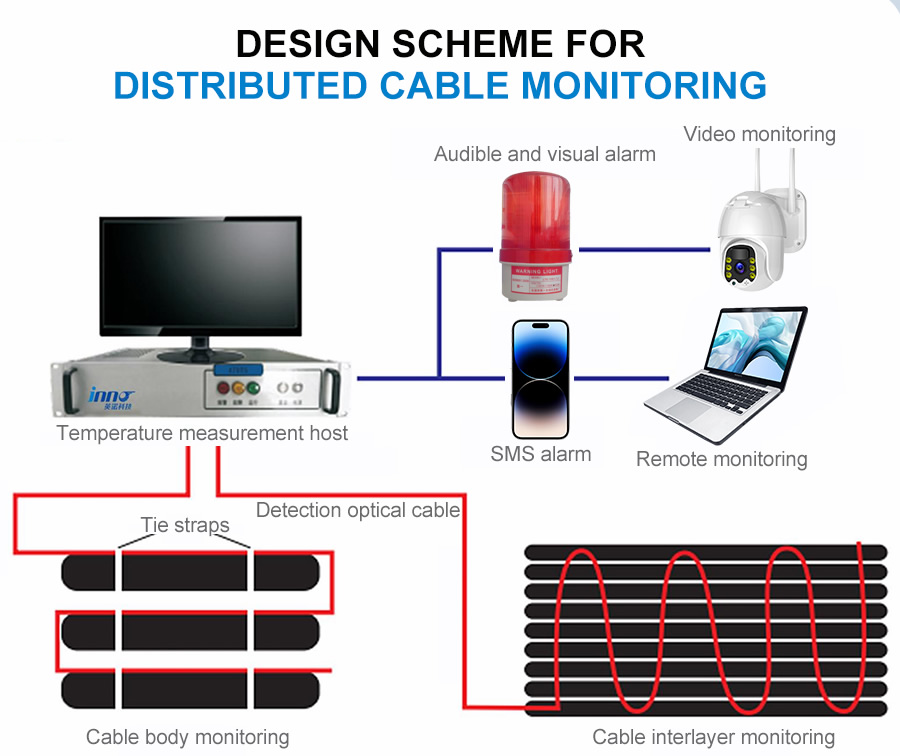
The distributed fiber optic temperature measurement system can timely obtain cable temperature information and changes in any complex environment. The temperature measurement system can set one or more monitoring points and alarm temperature points. If there is any abnormal situation in the cable temperature in the environment, and there is abnormal change in the cable temperature, if the cable temperature reaches or exceeds the set temperature, the temperature curve of the cable will be displayed in the workstation system, and the temperature measurement system will send alarm information to the PLC at any time. After receiving instructions from various monitoring points, the PLC’s internal program can control the environment of the cables based on the set temperature data. It can open the exhaust system, automatically close the fire doors, prevent the spread of fires, and ensure that the entire system is in a safe and controlled environment.
Application of Distributed Fiber Optic Temperature Measurement in Pipeline Temperature Monitoring
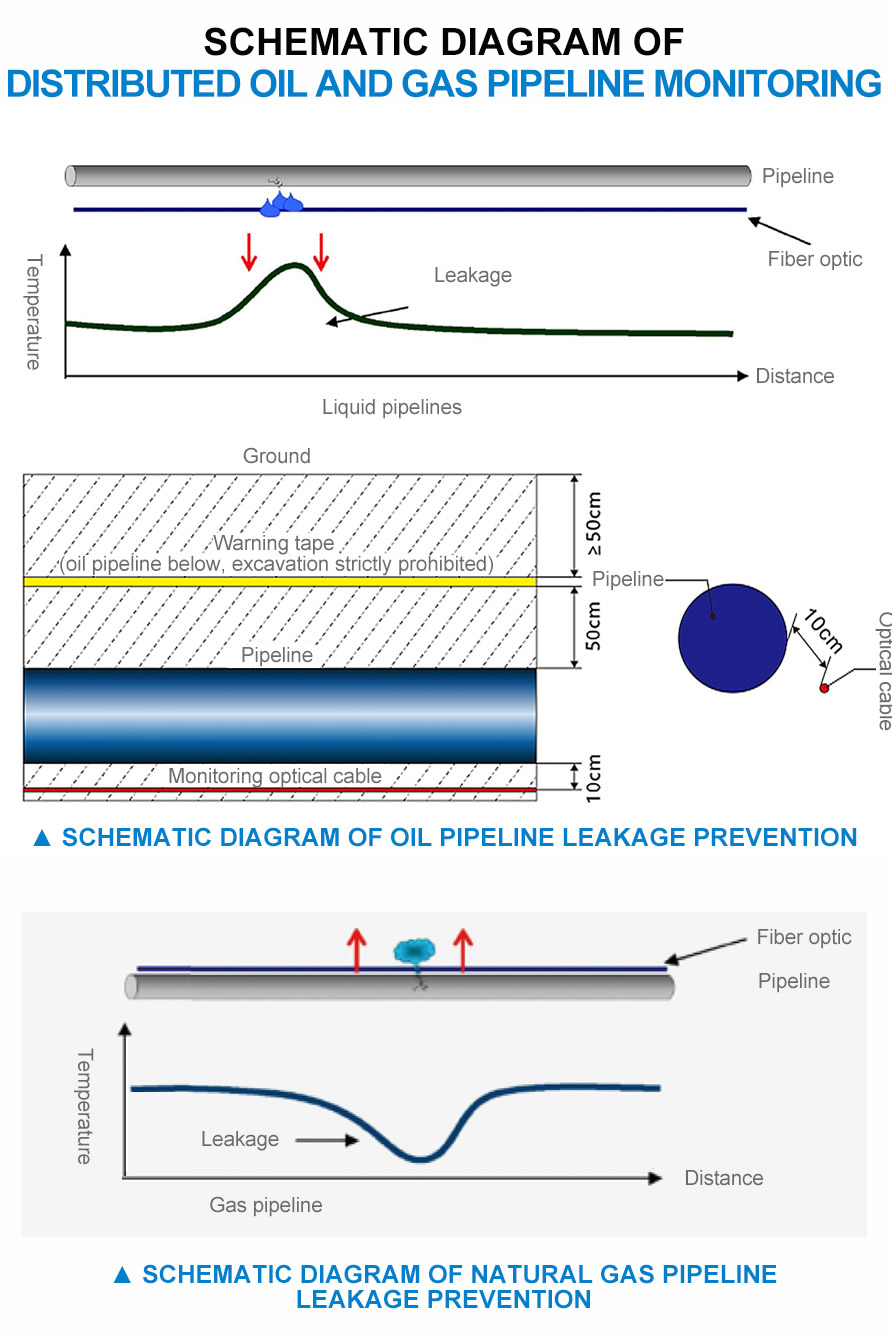
The entire fiber in the distributed Raman fiber optic temperature measurement system serves as both a data signal transmission medium and a temperature detection along the pipeline to achieve comprehensive monitoring of the pipeline. The alarm detection at each point can achieve any combination of three methods: constant temperature, درجة الحرارة التفاضلية, and temperature uniformity, ensuring the reliability of the alarm. لذلك, a reasonable fiber optic installation method provides reliable guarantees for the normal operation of the entire fiber optic temperature measurement system. The installation method of optical fibers varies for different functions of conveying pipelines.
Application of Distributed Fiber Optic Temperature Measurement System in Oil Tank Monitoring

Temperature monitoring of oil storage tanks
In oil storage tanks, temperature monitoring is crucial due to the characteristics of oil and changes in the storage environment. The traditional temperature monitoring method requires a large number of temperature sensors to be placed in the storage tank, which not only causes cost waste, but also has problems such as errors and difficulty in maintenance. By adopting a distributed fiber optic temperature measurement system, only one fiber optic cable needs to be buried in the storage tank to achieve monitoring of the internal temperature of the entire storage tank. This not only saves costs, but also improves the accuracy and reliability of monitoring.
Refinery temperature monitoring
There are a large number of high-temperature equipment and pipelines in refineries, and real-time monitoring of their temperature is very important. Using traditional temperature monitoring methods requires the installation of a large number of sensors, and the maintenance and replacement of sensors are also very difficult. The distributed fiber optic temperature measurement system can monitor the internal temperature of the entire refinery by burying a fiber optic cable, which not only greatly reduces the use of sensors, but also improves the accuracy and reliability of temperature monitoring.
Application of distributed fiber optic bus duct temperature monitoring

The distributed fiber optic temperature measurement system has a real-time monitoring and warning mechanism for dense bus ducts, which improves energy efficiency, ensures power supply safety, improves management efficiency and saves costs, and adapts to complex application environments to ensure the stability and safe operation of the power system.
The distributed fiber optic temperature measurement system consists of temperature measurement fiber optic cables, temperature measurement host, gateway, system platform, إلخ. The fiber optic temperature measurement host and communication management machine are installed in the monitoring room, and the temperature sensing fiber optic cables are laid along the surface of the bus duct. The cover plate at the connection of the bus duct ensures that each connector can measure the temperature of the cover plate. The data of the fiber optic temperature measurement host is uploaded to the system platform through the communication management machine.