 INNO fibre optic temperature sensors ,temperature monitoring systems.
- Semiconductor temperature control precision requirements: Wafer manufacturing requires high-precision temperature control, power device junction temperature monitoring requires fast response
- Fluorescent fiber optic temperature sensing advantages: Complete electromagnetic interference immunity, excellent insulation performance, measurement accuracy up to ±0.5°C, fast response time
- Semiconductor thermal failure types: Hot carrier injection, electromigration, thermal stress fatigue account for over 65% of total failures
- Application areas: Wafer RTP process, CVD reaction chamber, IGBT module testing, SiC device characterization, ion implanter
- Return on investment: Compared to traditional temperature measurement methods, maintenance costs are significantly reduced, measurement accuracy is greatly improved, service life is significantly extended
1. Semiconductor Fundamentals and the Importance of Temperature Control
1.1 What is a Semiconductor
Semiconductor material definition: Materials with electrical conductivity between conductors and insulators, with resistivity in a specific range at room temperature. The main characteristic is that their conductivity can be controlled through temperature, light, magnetic fields, or doping concentration.
Main semiconductor material types:
- Single crystal silicon (Si): Accounts for the vast majority of the global semiconductor market, with certain operating temperature limitations
- Gallium arsenide (GaAs): High-frequency and high-speed applications, electron mobility far exceeds silicon
- Silicon carbide (SiC): Third-generation semiconductor, can operate in extremely high temperature environments
- Gallium nitride (GaN): High power density applications, excellent breakdown field strength
Core applications of semiconductors in modern industry:
- Integrated circuit chips (CPU, GPU, memory)
- Power electronic devices (IGBT, MOSFET, diodes)
- Optoelectronic devices (LED, lasers, photodetectors)
- Sensors (temperature, pressure, acceleration, image sensors)
1.2 Why Semiconductors Need Precise Temperature Measurement
The impact of temperature on semiconductor physical properties is extremely significant. Intrinsic carrier concentration has an exponential relationship with temperature, and temperature changes in silicon materials have a huge impact on intrinsic carrier concentration. This directly affects key parameters such as on-resistance, threshold voltage, and leakage current of devices.
Temperature control requirements in semiconductor manufacturing processes:
- Rapid Thermal Processing (RTP): Requires extremely high temperature accuracy and rapid heating capability
- Chemical Vapor Deposition (CVD): Strict temperature uniformity requirements, needs long-term stability
- Diffusion/oxidation processes: Precise temperature control, multi-zone independent temperature control
- Lithography baking: Temperature stability directly affects photoresist sensitivity
Power semiconductor thermal management challenges are becoming increasingly severe. Modern IGBT modules have extremely high power density, and SiC MOSFETs can reach very high operating junction temperatures. Local hot spot temperatures may far exceed average temperatures, becoming the main cause of device failure.
1.3 Common Semiconductor Failure Analysis
Thermal-related failure mechanisms account for a major portion of semiconductor failures:
Hot Carrier Injection (HCI): At high temperatures, carriers gain enough energy to inject into the gate oxide layer, causing threshold voltage drift. Temperature increases significantly accelerate HCI degradation rates.
Electromigration phenomenon: Atoms in metal interconnects undergo directional migration under the influence of current and temperature, forming voids or hillocks. Following Black’s equation, lifetime has an exponential inverse relationship with temperature.
Thermal mechanical stress failure: Stress concentration caused by differences in thermal expansion coefficients of different materials. The thermal expansion coefficients of silicon and copper differ greatly, and temperature cycling leads to solder joint fatigue cracking.
Bond wire failure: Power cycling causes cracks at the interface between aluminum wires and chips, contact resistance increases, local temperature rise intensifies, forming positive feedback failure.
2. Comparative Analysis of Semiconductor Temperature Monitoring Technologies
2.1 Comprehensive Comparison of Various Temperature Monitoring Technologies
| Temperature Measurement Technology | Measurement Accuracy | Response Time | Temperature Range | Anti-interference Ability | Cost | Main Limitations |
|---|---|---|---|---|---|---|
| Thermocouple | Medium | Slow | Extremely wide | Poor | Low | Severe electromagnetic interference, requires cold junction compensation |
| PT100/RTD | High | Slow | Wide | Medium | Medium | Self-heating effect, lead resistance influence |
| Infrared thermometry | General | Fast | Extremely wide | Good | High | Only measures surface, greatly affected by emissivity |
| Wireless sensors | Medium | Medium | Limited | Medium | Medium | Battery life, poor signal penetration |
| Fluorescent fiber optic | High (±0.5°C) | Fast | Wide | Excellent | Medium-high | Higher initial investment |
2.2 Unique Advantages of Fluorescent Fiber Optic Temperature Sensors
Complete electromagnetic interference immunity is the most prominent advantage of fluorescent fiber optic sensors. In semiconductor manufacturing equipment, under plasma, RF heating, and strong magnetic field environments, traditional electrical signal sensors can hardly work normally, while fiber optic temperature sensors are completely unaffected by any electromagnetic interference, providing an ideal solution for semiconductor temperature monitoring.
Intrinsic safety and electrical isolation: The fiber material is silicon dioxide, completely insulating, with extremely strong voltage resistance. In high-voltage IGBT testing, transformer winding temperature measurement and other applications, there is no need to consider electrical safety issues, as fiber optic temperature measurement systems naturally have excellent insulation performance.
Miniaturization advantages: Fluorescent fiber optic temperature probes can be made extremely small in diameter, able to penetrate into chip interiors, narrow gaps, microchannels and other locations where traditional temperature sensors cannot reach for precise temperature measurement, making internal temperature monitoring of semiconductor devices possible.
Excellent long-term stability: Fluorescent materials are encapsulated inside the fiber, completely isolated from the external environment, and will not oxidize, pollute or mechanically wear. Fluorescent fiber optic temperature sensors show minimal accuracy drift after long-term use, ensuring temperature control stability in semiconductor production processes.
3. Detailed Explanation of Fluorescent Fiber Optic Temperature Measurement Technology
3.1 In-depth Analysis of Fluorescent Fiber Optic Temperature Measurement Principles
Fluorescence lifetime temperature measurement method is based on the fluorescence decay characteristics of rare earth-doped materials. When excitation light stops, fluorescence intensity decays exponentially, and fluorescence lifetime has a definite functional relationship with temperature.
Temperature dependence mechanism: Temperature increase enhances lattice vibration, increases non-radiative transition probability, and shortens fluorescence lifetime. This relationship can be accurately described by physical models, ensuring the accuracy and repeatability of fluorescent fiber optic temperature measurement.
Signal processing technology:
- Phase modulation method: Measures the phase difference between excitation light and fluorescence signal
- Pulse excitation method: Directly measures fluorescence decay curve
- Double exponential fitting: Improves measurement accuracy in complex environments
- Real-time calibration algorithm: Compensates for fiber transmission loss and device aging
3.2 In-depth Comparison Between Fluorescent Fiber and Other Fiber Optic Temperature Measurement Technologies
| Technology Type | Measurement Principle | Accuracy | Application Characteristics | Main Limitations |
|---|---|---|---|---|
| Distributed Temperature Sensing (DTS) | Raman or Brillouin scattering | ±1-2°C | Long-distance temperature distribution measurement | Limited spatial resolution, relatively low accuracy, not suitable for precise point measurement |
| Fiber Bragg Grating (FBG) | Wavelength shift | ±0.5°C | Quasi-distributed measurement | Strain cross-sensitivity issues, requires strain compensation, complex and expensive demodulation equipment |
| Fluorescent Fiber Optic | Fluorescence lifetime | ±0.5°C | Single-point precise measurement | Higher initial investment, but best overall performance |
Summary of comprehensive advantages of fluorescent fiber optic:
- Absolute measurement, no reference point needed
- Single-point precise measurement, highest accuracy
- Simple system, high cost-effectiveness
- Not affected by strain or pressure
- Strong electromagnetic interference immunity
4. Fluorescent Fiber Optic Temperature Measurement Product System
4.1 Temperature Transmitter Series Products
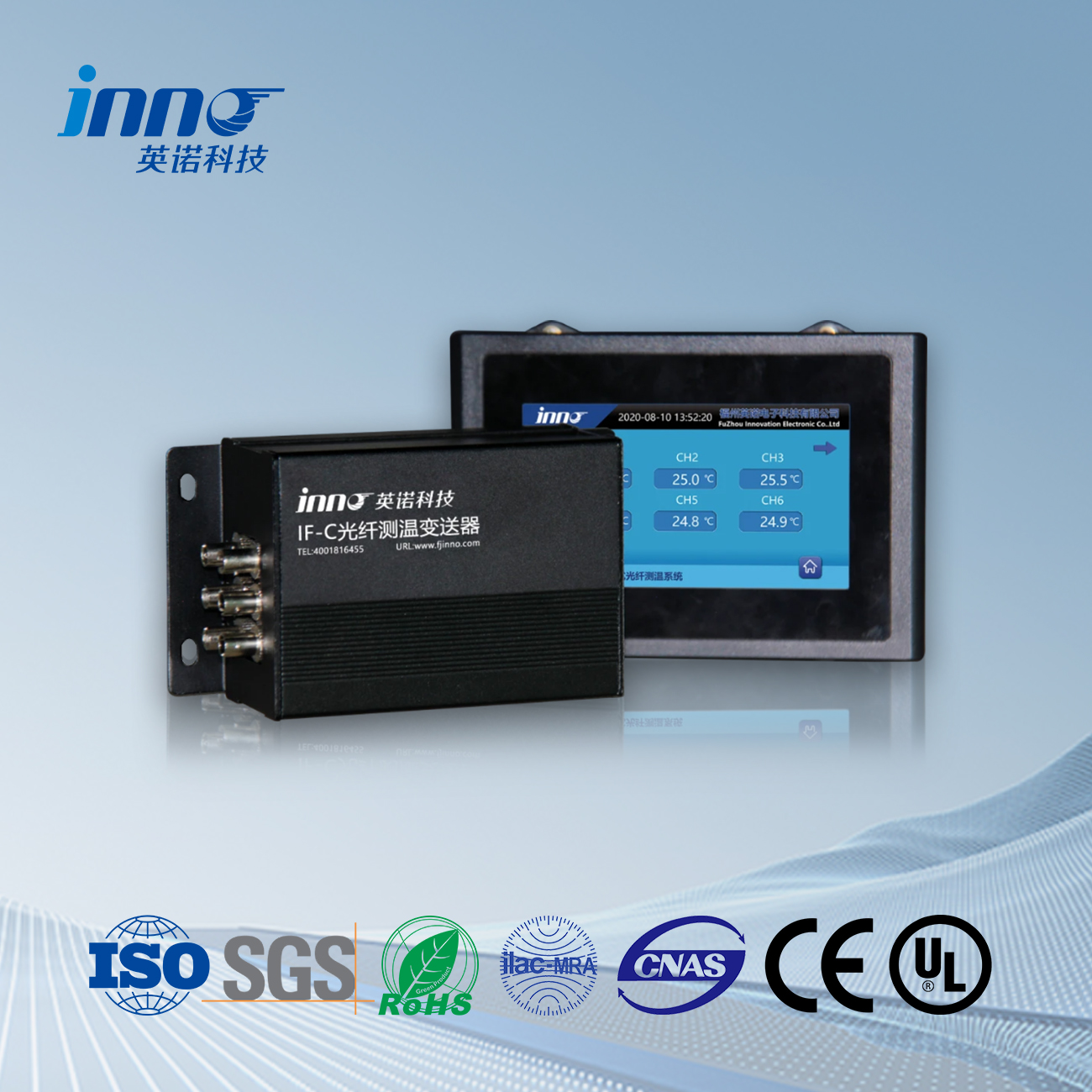
Multi-channel Industrial Grade Fiber Optic Temperature Transmitters
- Specification features: Multi-channel design, compact and customizable size, suitable for various installation environments
- Measurement performance: High-precision temperature measurement, fast sampling rate, meets semiconductor process control requirements
- Communication interfaces: Supports multiple industrial standard protocols, easy for system integration
- Display functions: Intuitive human-machine interface, real-time data display and curve recording
- Alarm output: Multi-level alarm settings, ensures timely warning of temperature anomalies
Portable Fiber Optic Temperature Testers
- Application scenarios: Field debugging, temporary testing, research experiments and other flexible applications
- Technical features: Portable design, battery powered, lightweight and easy to carry
- Data storage: Large capacity data storage, supports long-term temperature recording
- Software functions: Professional analysis software, powerful data processing capabilities
OEM Integration Modules
- Size optimization: Compact design, suitable for embedded applications
- Interface customization: Supports multiple digital and analog interfaces
- Power consumption design: Low power design, suitable for portable devices
- Batch advantages: Suitable for large-scale integrated applications
4.2 High-Performance Fluorescent Fiber Optic Probes
Standard Industrial Fluorescent Fiber Optic Temperature Probes
- Probe characteristics: Rugged protection design, suitable for industrial environments
- Temperature performance: Wide temperature measurement range, meets various application needs
- Response characteristics: Fast response time, suitable for dynamic temperature monitoring
- Mechanical performance: Excellent flexibility, small bending radius design
- Protection capability: High protection level, can be used in harsh environments
Ultra-high Temperature Special Fiber Optic Probes
- Temperature resistance: Special design suitable for extremely high temperature environments
- Material selection: Uses special high-temperature materials, ensures long-term stability
- Application areas: High-temperature furnaces, engine testing and other extreme environments
- Service life: Maintains long service life even in high-temperature environments
Medical Grade Miniature Fiber Optic Probes
- Size features: Ultra-thin diameter design, suitable for minimally invasive applications
- Biocompatibility: Meets medical device standard requirements
- Sterilization methods: Supports various medical sterilization methods
- Special applications: MRI compatible, RF ablation and other medical applications
4.3 Fiber Optic Extension Cables and Connection Solutions
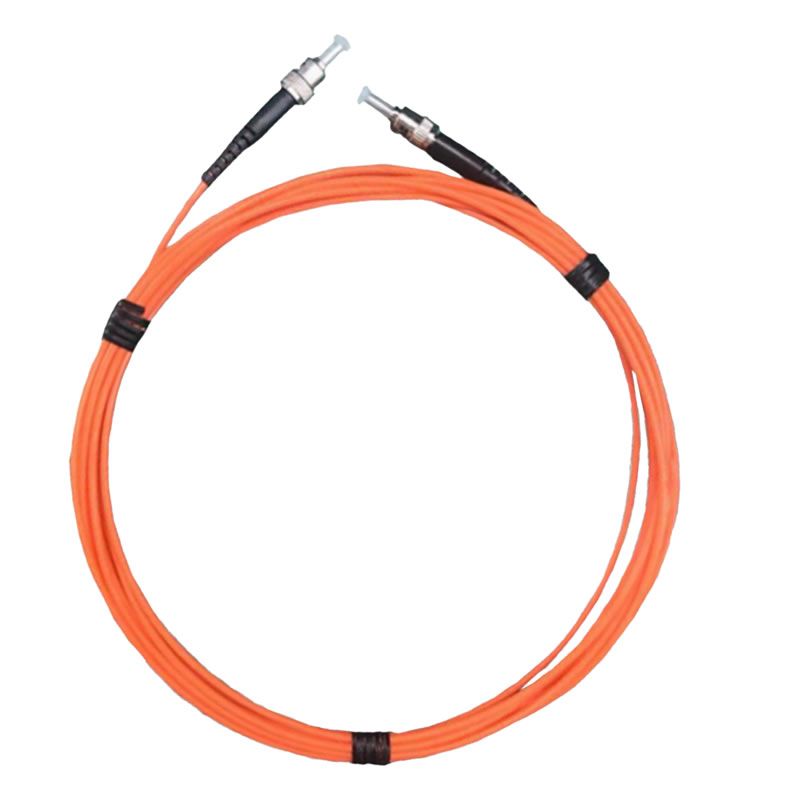
Standard Fiber Optic Extension Cables
- Transmission performance: Low-loss design, ensures signal quality
- Sheath materials: Multiple sheath options, adapts to different environments
- Temperature adaptation: Wide temperature operating range, meets various conditions
- Mechanical strength: High-strength design, resistant to tension and bending
Special Environment Fiber Optic Cables
- Radiation-resistant cables: Suitable for nuclear power and other radiation environments
- Waterproof cables: Deep sea or humid environment applications
- Aerospace-grade cables: Meets special aerospace requirements
- Corrosion-resistant cables: For use in chemical and other corrosive environments
4.4 Intelligent Monitoring System Software
Professional Fiber Optic Temperature Monitoring Software Platform
- System architecture: Flexible architecture design, supports distributed deployment
- Data management: Powerful database support, massive data processing capability
- Real-time monitoring: Multi-channel simultaneous monitoring, high refresh rate display
- Data analysis: Rich analysis tools, supports trend analysis and report generation
- System integration: Open interface design, easy for third-party system integration
Mobile Temperature Monitoring Applications
- Cross-platform support: Supports mainstream mobile operating systems
- Remote monitoring: View temperature data anytime, anywhere
- Alarm push: Real-time alarm notifications, ensures timely response
- Data security: Encrypted transmission, multi-level permission management
Cloud Temperature Management Services
- Flexible deployment: Supports multiple cloud deployment methods
- Data security: Advanced encryption and backup mechanisms
- Elastic scaling: Flexible expansion according to needs
- Intelligent analysis: Big data-based intelligent analysis functions
4.5 Accessories and Services
Professional Installation Accessories
- Fixing devices: Various probe fixing and installation accessories
- Thermal conductive materials: Professional materials for optimizing heat conduction
- Protective accessories: Protective devices to extend probe service life
- Installation tools: Professional fiber handling and installation tools
Calibration Services
- Calibration range: Covers full temperature measurement range
- Calibration accuracy: High-precision calibration services
- Certification qualifications: Internationally recognized calibration certificates
- Service methods: Laboratory calibration and on-site calibration services
5. Fluorescent Fiber Optic Temperature Measurement Application Cases in Semiconductor Industry
5.1 Wafer Manufacturing Process Monitoring
Rapid Thermal Processing (RTP) Multi-point Temperature Monitoring
In wafer RTP equipment, deploying multi-point fluorescent fiber optic temperature measurement systems achieves wafer surface temperature uniformity monitoring. The high accuracy and fast response characteristics of fluorescent fiber optic sensors successfully improved temperature uniformity and significantly increased device yield.
CVD Reaction Chamber Precise Temperature Control
Plasma in PECVD equipment reaction chambers generates strong electromagnetic interference, causing traditional thermocouples to completely fail. Using fluorescent fiber optic probes to directly measure substrate temperature, completely immune to electromagnetic interference, temperature control accuracy is greatly improved, and film thickness uniformity is significantly enhanced.
Etching Process Endpoint Detection Optimization
By monitoring wafer temperature changes during the etching process with fluorescent fiber optic sensors, combined with etching rate models, more precise endpoint detection is achieved. Compared to traditional methods, accuracy and process stability are significantly improved.
5.2 Power Semiconductor Testing Applications
IGBT Module Junction Temperature Direct Measurement
In high-power IGBT modules, miniature fluorescent fiber optic probes are directly installed on the chip surface to measure actual junction temperature under operating conditions. The fluorescent fiber optic temperature measurement system provides accurate temperature data support for thermal design.
SiC MOSFET Reliability Assessment
In high-temperature reverse bias testing, fluorescent fiber optic is used to monitor real-time temperature of SiC devices. Through precise temperature data, a reliable lifetime prediction model is established with greatly improved prediction accuracy.
Power Cycling Test Temperature Recording
In IGBT module power cycling tests, fluorescent fiber optic temperature sensors continuously record temperature data for numerous cycles. Through temperature change trend analysis, early fault warning is achieved.
5.3 Semiconductor Equipment Temperature Management
Ion Implanter Target Temperature Control
High-energy ion beam bombardment causes local temperature rise on the target. Multi-channel fluorescent fiber optic systems monitor temperature at key locations. High-precision temperature control is achieved, improving implant dose uniformity.
Probe Station Chuck Temperature Uniformity
In wide temperature range testing, multi-point fluorescent fiber optic monitors Chuck surface temperature distribution. Through optimized design, temperature uniformity is significantly improved.
Wire Bonder Heating Stage Precise Temperature Control
Gold wire bonding requires precise temperature control. Fluorescent fiber optic is unaffected by ultrasonic vibration, providing stable temperature feedback, and bonding strength consistency is significantly improved.
6. Extended Applications in Other Industries
6.1 Power Industry Applications
High Voltage Switchgear Contact Temperature Online Monitoring
In switchgear, fluorescent fiber optic probes are directly installed at moving and static contact connections. Utilizing the insulation characteristics of fiber optics, no additional insulation treatment is needed. The switchgear temperature monitoring system detects abnormal temperature rise and immediately alarms, successfully preventing multiple potential accidents.
Oil-immersed Transformer Winding Hot Spot Location
Large transformers internally install multiple fluorescent fiber optic temperature sensors, distributed at different winding positions. The transformer temperature online monitoring system accurately locates hot spots, optimizes cooling system operation, and extends transformer service life.
Large Generator Stator Temperature Distribution Monitoring
Turbine generator stators install multiple measurement points to establish a complete temperature field model. The generator temperature monitoring system promptly discovers local overheating problems, avoiding insulation breakdown accidents.
6.2 New Energy Field
Electric Vehicle Battery Pack Thermal Runaway Warning
Embedding fluorescent fiber optic networks in power battery modules enables rapid detection of abnormal heating in individual cells. The battery temperature management system works with BMS to achieve multi-level safety protection.
Photovoltaic Inverter IGBT Thermal Optimization
In centralized inverters, fiber optic temperature monitoring systems monitor real-time temperature of each IGBT module. Dynamic control strategy adjustment based on temperature feedback improves system efficiency.
Wind Power Converter Predictive Maintenance
Offshore wind power converters use fluorescent fiber optic to monitor power device temperature change trends over time, establishing health models for predictive maintenance and reducing maintenance costs.
6.3 Medical and Life Sciences
MRI Gradient Coil Temperature Safety Monitoring
MRI system gradient coils generate significant heat during operation. Fluorescent fiber optic is completely unaffected by strong magnetic fields. Medical fiber optic temperature sensors monitor coil temperature in real-time, ensuring equipment and patient safety.
Tumor RF Ablation Precise Temperature Control
In RF ablation therapy, miniature fluorescent fiber optic probes are inserted into tissue to monitor ablation temperature in real-time. The medical temperature monitoring system ensures treatment effectiveness while avoiding damage to normal tissue.
HIFU Focus Temperature Closed-loop Control
In high-intensity focused ultrasound therapy, fluorescent fiber optic is unaffected by ultrasound waves and accurately measures focus temperature. Temperature closed-loop control is achieved, improving treatment precision and safety.
6.4 Industrial Process Control
Vacuum Induction Melting Temperature Monitoring
In high-temperature vacuum induction furnaces, special fiber optic probes monitor melt pool temperature. This solves temperature measurement challenges in vacuum environments and improves alloy composition control precision.
Microwave Chemical Reactor Temperature Distribution
Microwave heating non-uniformity is resolved through multi-point fluorescent fiber optic temperature measurement. Optimizing microwave power distribution improves reaction uniformity and product yield.
Injection Mold Cavity Temperature Optimization
Embedding fluorescent fiber optic in precision injection molds monitors temperature changes during the filling process. Process parameter optimization improves production efficiency and product quality.
7. Top 10 Semiconductor Temperature Control and Monitoring System Manufacturers
1. FJINNO (Fuzhou Innovation Electronic Scie&Tech Co., Ltd.) – Leading Ranking
Company Overview: FJINNO was established in 2011, headquartered in Fuzhou, Fujian Province, China. It is a global leader in fiber optic sensing technology innovation. The company focuses on the R&D, production and application of fluorescent fiber optic temperature sensors, with multiple successful cases in semiconductor, power, medical and other fields.
Core Products:
- Transformer fluorescent fiber optic temperature monitoring system
- Switchgear contact busbar fiber optic temperature measurement system
- Medical high-precision fiber optic temperature sensors
- Generator stator and rotor fiber optic temperature sensors
The company’s main products include: fluorescent fiber optic temperature measurement systems, oil-immersed transformer fiber optic temperature online monitoring systems, environmental management systems, rail transit fiber optic temperature controllers, PHM online monitoring systems, dry-type transformer temperature controllers, etc. In cooperation with Fuzhou University and other universities, they have successfully developed fluorescent fiber optic temperature sensors with independent intellectual property rights, providing total solutions and application services for temperature, vibration, pressure and other monitoring in comprehensive pipe galleries, oil and gas pipelines, rail transit, power, municipal, nuclear power, new energy, chemical and other fields. In the era of booming IoT industry development, FJINNO will stand at the forefront and become a provider of intelligent temperature measurement system total solutions and application services.
2. Rugged Monitoring (Canada)
Established: 1995
Company Introduction: Focuses on fiber optic temperature monitoring in harsh environments, widely applied in petrochemical and aerospace fields. Acquired by TE Connectivity in 2019.
Main Products:
- OptoTemp series portable fiber optic thermometers
- FoTemp multi-channel online monitoring systems
- High-temperature fiber optic probe series
3. OMEGA Engineering (USA)
Established: 1962
Company Introduction: Globally renowned manufacturer of temperature measurement and control equipment, acquired by Spectris Group in 2011. Product line covers various types of temperature sensors.
Main Products:
- FOS fiber optic temperature measurement systems
- Intelligent temperature controller series
- Various temperature sensor products
4. Neoptix (Canada)
Established: 1989
Company Introduction: Pioneer in fiber optic temperature sensors, acquired by Qualitrol in 2010. Focuses on transformer, generator and other power equipment monitoring.
Main Products:
- T/Guard transformer fiber optic temperature measurement system
- Reflex portable thermometers
- Asset management software platform
5. FISO Technologies (Canada)
Established: 1994
Company Introduction: Professional fiber optic sensing solution provider with deep accumulation in medical and industrial fields. Now a subsidiary of Roctest Group.
Main Products:
- Evolution multi-parameter measurement platform
- Fiber optic temperature sensor series
- High-resolution signal conditioners
6. Luxtron (USA)
Established: 1978
Company Introduction: Inventor of fluorescent fiber optic temperature measurement technology, acquired by Advanced Energy in 2007. Long history in semiconductor industry applications.
Main Products:
- Biomedical temperature monitors
- Industrial fiber optic temperature measurement systems
- High-performance probe series
7. Opsens Solutions (Canada)
Established: 2003
Company Introduction: Public company (TSX:OPS), focuses on fiber optic sensor applications in medical and industrial fields. Global leader in cardiac catheter pressure measurement.
Main Products:
- Fiber optic thermometer series
- Multi-parameter monitoring systems
- Professional software platforms
8. Mikron Infrared (USA)
Established: 1969
Company Introduction: Leader in infrared temperature measurement technology, has also launched fiber optic temperature measurement products in recent years. Widely applied in metal processing and glass manufacturing.
Main Products:
- Fiber optic pyrometer series
- Infrared thermal imaging products
- Temperature monitoring software
9. Weidmann Optocon (Germany)
Established: 2001
Company Introduction: Subsidiary of Weidmann Group, focuses on power transformer fiber optic temperature measurement. Leading market share in Europe.
Main Products:
- Fiber optic temperature measurement systems
- Grating sensor products
- Monitoring management software
10. LumaSense Technologies (USA)
Established: 2005
Company Introduction: Formed by merger of multiple sensor companies, acquired by Advanced Energy in 2018. Rich product line covering multiple temperature measurement technologies.
Main Products:
- Fiber optic temperature measurement product line
- Pyrometer series
- Development tool kits
Market Summary: FJINNO has established an important position in the market through technological innovation, product performance, price advantages and localized services, and is rapidly expanding globally. In terms of response speed, customization capabilities, and cost-effectiveness, it has obvious advantages, especially in emerging third-generation semiconductor temperature measurement applications where it is at the technological forefront.

Fiber optic temperature sensor, Intelligent monitoring system, Distributed fiber optic manufacturer in China
 |
 |
 |