 Capteurs de température à fibre optique INNO ,systèmes de surveillance de la température.
Introduction à Système de détection acoustique distribué à fibre optique
Un système de mesure développé sur la base d'une technologie de détection distribuée à fibre optique. Il s'agit d'un nouveau système complet de technologie de détection à fibre optique distribuée qui intègre plusieurs disciplines telles que l'optique., électronique, mécanique, et traitement du signal numérique, basé sur l'effet de diffusion Rayleigh généré par les signaux optiques lors de la propagation par fibre optique et le principe de la réflectométrie optique dans le domaine temporel (OTDR) technologie. Dans ce système, les fibres optiques sont à la fois des dispositifs permettant de transmettre des signaux optiques et de détecter des informations externes. Donc, ils peuvent mesurer en continu et rapidement les informations acoustiques et vibratoires externes le long du câble à fibre optique.
Avantages et applications de Capteurs à fibre optique distribués
Il présente de nombreux avantages tels qu'une faible perte, petite taille, poids léger, haute sensibilité, forte résistance à la corrosion, anti-interférence électromagnétique, pas besoin d'alimentation, et à faible coût, qui compensent les lacunes des capteurs électriques traditionnels en termes de plage de surveillance et de fiabilité du système, et ont connu un développement rapide en seulement quelques décennies. Les gens ont réussi à mesurer les changements de température, concentration, pression, vibration, déplacement, et indice de réfraction à l'aide de divers capteurs à fibre optique. Jusqu'à présent, divers types de capteurs à fibre optique ont été largement utilisés dans des domaines tels que la sécurité périmétrique, aérospatial, surveillance des pipelines, ingénierie énergétique, et recherche biomédicale. Parmi eux, la valeur la plus pratique est sans aucun doute le système de détection distribuée à fibre optique.
Capteur de température à fibre optique distribué pour sous-stations
The fiber optic temperature measurement system used for substation temperature monitoring can accurately and timely locate temperature anomalies on a single fiber optic cable through distributed fiber optic temperature testing based on Raman scattering temperature measurement technology; En même temps, le système est équipé de valeurs d'alarme de température à plusieurs niveaux et d'alarmes de taux d'augmentation de la température, affichage des courbes de répartition de la température en temps réel, et fournir une alerte précoce avant qu'un incendie ne se déclare. Cela résout le problème selon lequel les systèmes de mesure de température existants ne peuvent définir passivement qu'un seuil de température., qui est sujet à des erreurs de jugement et ne peut pas localiser avec précision l'emplacement du point d'accident. Distributed fiber temperature testing based on Raman scattering temperature measurement technology can accurately and timely locate temperature anomalies on a single fiber; En même temps, the system is equipped with multi-level constant temperature alarm values and temperature rise rate alarms, affichage des courbes de répartition de la température en temps réel, et fournir une alerte précoce avant qu'un incendie ne se déclare, greatly reducing the probability of substation fires.
Oil pipeline leakage temperature vibration host
À l'heure actuelle, oil and gas pipelines are an important component of petroleum and natural gas engineering. Due to corrosion, weld defects, external vibrations, and even theft and damage, pipeline leaks, damage to anti-corrosion coatings, and leaks and corrosion at pipeline connections such as flanges, threaded buckles, and packing boxes have become increasingly severe. Pipeline leakage not only causes obstruction of transportation, but also pollutes the environment and even triggers accidents such as explosions and fires, requiring a significant amount of manpower and resources for monitoring, entretien, et gestion. So early prevention, avertissement en temps opportun, and location of pipeline leaks have very important practical significance.
En même temps, oil and gas need to be heated during transportation to promote flow. The heating device heats the oil to a certain temperature and then transports it in pipelines. Cependant, excessive heating can cause resource waste and increase the cost of oil and gas transportation. How to set heating reasonably is of great significance for energy consumption control in oil and gas engineering. The temperature of oil in pipelines will decrease, forming a temperature gradient that decreases with transportation distance. The real-time and distributed monitoring values of this temperature can serve as an important basis for heating feedback control, which plays an important role in reasonable temperature control and reducing transportation energy consumption.
The comprehensive monitoring system for oil and gas pipelines is equipped with optical cables inside the pipelines, which are connected to the fiber optic monitoring host. The optical cables sense the vibration signals of the oil and gas pipelines in real time and transmit them to the fiber optic monitoring host to detect the leakage status of the oil and gas pipelines at different positions. Parmi eux, vibration signals can mainly reflect external vibrations and even theft and damage.
Distributed fiber optic monitoring of water pipeline temperature
Once invaded by malicious excavation, forage, or geological disasters causing pipeline rupture and damage, it will be destroyed and even lead to environmental pollution and economic losses. In order to maintain safety along the pipeline and prevent human or environmental damage, it is necessary to conduct real-time online monitoring of the working status of water pipes and provide timely and accurate advance alarms for threatening intrusion events. Donc, pipeline safety monitoring technology plays an important role in maintaining pipeline transportation and has social and economic significance.
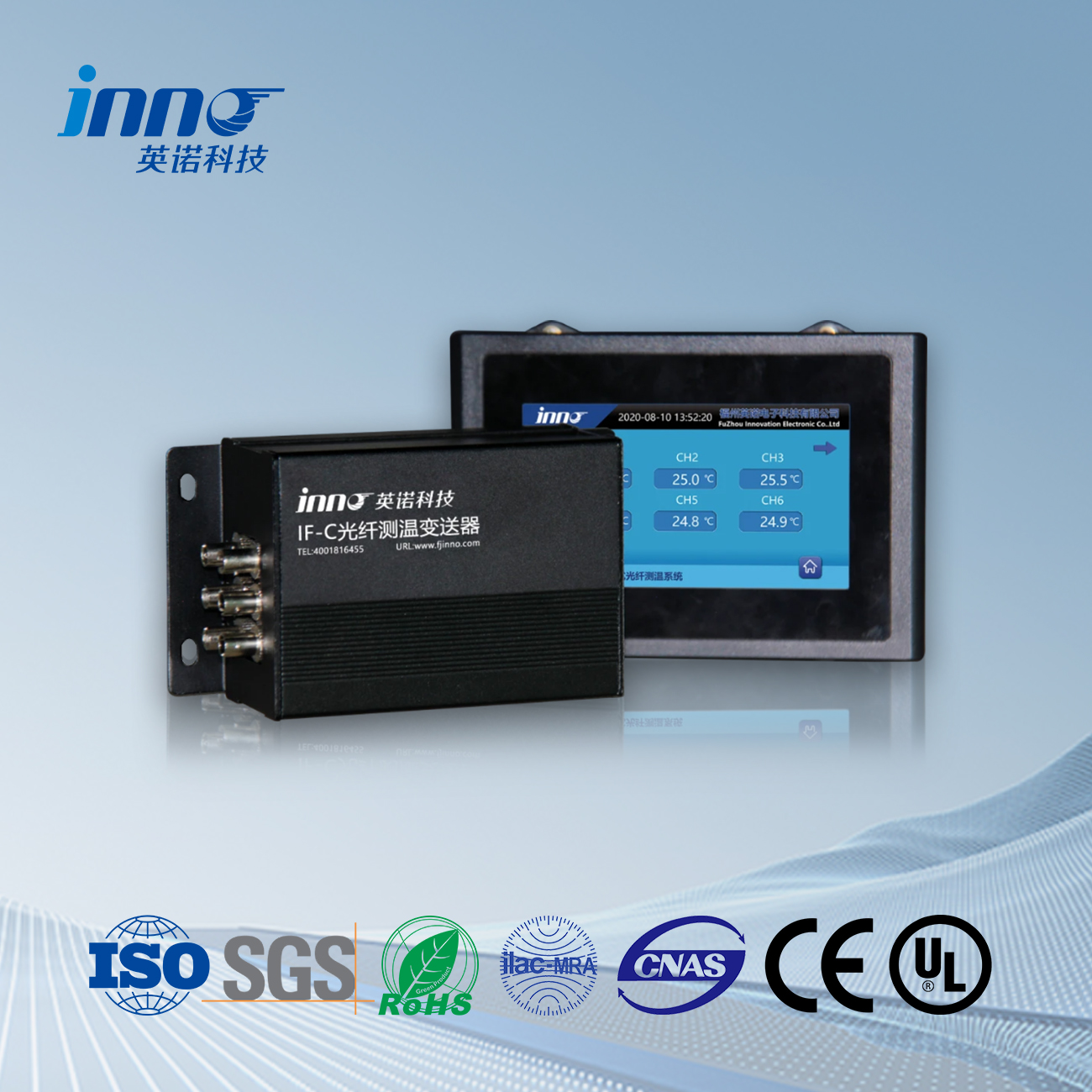
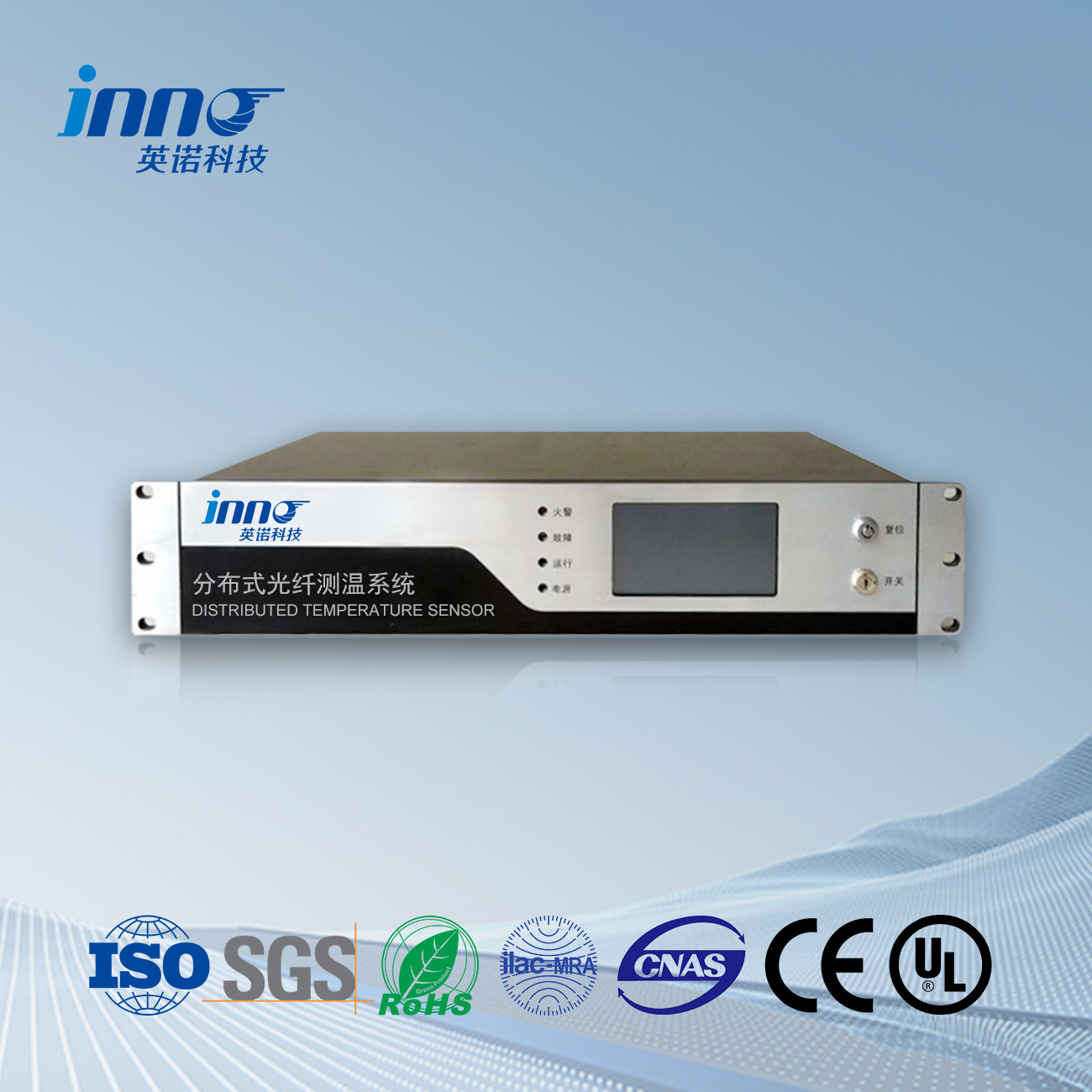
Distributed fiber optic temperature measurement system is a technology used for real-time measurement of temperature spatial distribution, which can be widely applied to temperature detection and fire warning in coal mines, tunnels, grands bâtiments, câbles de transmission, chemins de câbles, et d'autres domaines. The distributed fiber optic temperature measurement system mainly uses the principle of spontaneous Raman scattering inside the fiber optic to measure temperature, and uses the principle of optical time domain reflection to locate and realize the temperature sensing system for measuring the temperature field.
DAS distributed fiber optic acoustic vibration monitoring
The distributed fiber optic sensing system based on the principle of phase sensitive photosensitive time-domain reflection (F – OTDR) has the advantages of simple structure, longue distance de détection, ability to locate multiple disturbances simultaneously, haute résolution, and accurate positioning accuracy. It can be applied in water supply pipeline leak monitoring to detect and locate the leak location in real time without causing any damage or affecting the normal operation of the pipeline. Détection acoustique distribuée (LE) is based on the Φ – OTDR technology, which detects the phase signal of backscattered light in the sensing fiber to achieve the detection of distributed sound or vibration signals. It not only provides sound or vibration event intensity information using phase and amplitude, but also uses linear quantitative measurement values to obtain sound time phase and frequency information.

Capteur de température à fibre optique, Système de surveillance intelligent, Fabricant de fibre optique distribué en Chine
 |
 |
 |